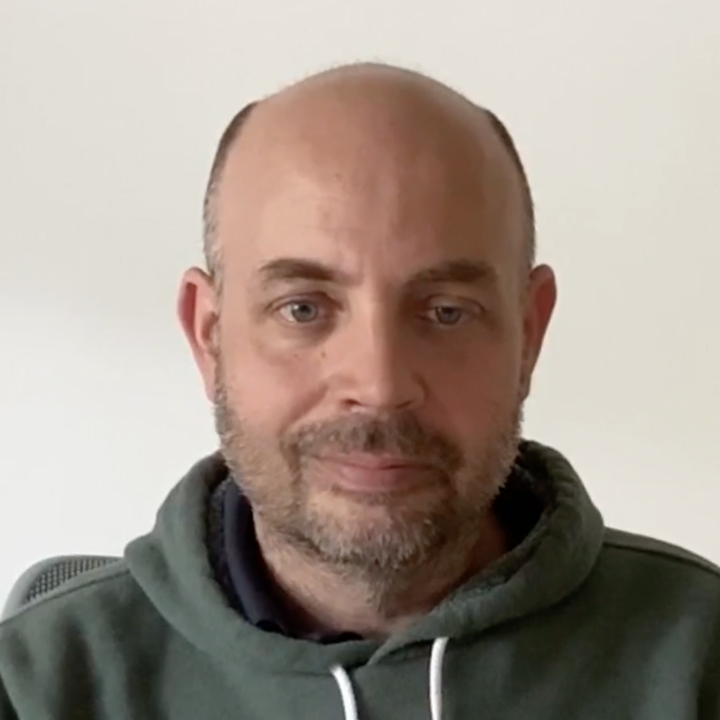
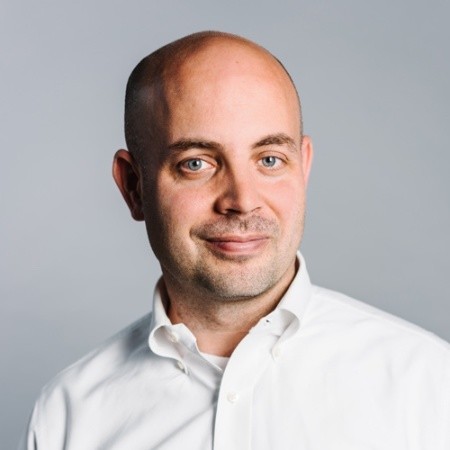
Mason
,
Poe
Managing Member
at
Edgar Allan
Episode
4
Why Most Agencies Aren’t Ready for AI
Overview
Most agencies talk about where the web is going. Edgar Allan builds for it. In this episode, Diogo sits down with Mason Po, founder of Edgar Allan, a 50-person brand strategy and Webflow agency based in Atlanta. Mason has been in the agency space for over 20 years and has watched the web change in ways most people are still catching up to. They talk about how Edgar Allan started after Mason was fired with no savings and no severance, why he spent years formatting new business presentations at a big agency just to absorb how pitching actually works, and how the 80/20 rule shapes everything they build, 80% runway, 20% setting the standard for what comes next. They also get into what enterprise Webflow actually means, why Figma Sites is good news for serious agencies, how AI is reshaping the role of a website from brochure to owned media, and why Mason rebuilt edgarallan.com as a conversational AI experience before most agencies had even written a blog post about it. The thing keeping him up at night: 60 to 90 days of sales visibility, and it has never changed no matter the size of the team.
Transcript
Diogo (00:00.93)
Hi, Mason. Thank you so much for taking the time. Let's just kick off things and kind of start about talking about who is Mason.
Mason (00:14.3)
Awesome. Well, Diogo thanks for inviting me on and I'm excited to be able to kind of hang out with you for a little bit.
I don't know, I'm a builder. I love to build things. That's probably the best way to describe what I do day to day and build things on the internet with people I admire within the team at EA with customers that are trying to do new things. And when I'm not doing that, I love to cook, I love to get out in the yard and just fiddle around and just really...
Yeah, see, like have an idea and then see like what could be done to kind of bring it to life.
Diogo (00:55.384)
amazing. And as you mentioned, EA stands for Edgar Allen for the ones that we don't know. Is that your main business? I believe. And that's where you focus most of your time.
Mason (01:05.98)
Yeah. Yeah. So we're a team of about, I guess, almost 50 people now, based in Atlanta. And then we have a team in Argentina, South Africa and Serbia. So we have some like general time zones that we work in and our work goes from brand strategy through build. So we try to think about like how to.
really understand the full problem that someone's trying to go in and address, build a team around that, and then be able to get those ideas out in the world and then see what we can learn and then bring back to refine those ideas. And it's been great. It's like, you know, it's a lot of work. It can be a lot of stress. think starting and running an agency is, it can be glamorized, but it's really just, it's a lot of spreadsheets and Zoom calls and.
It's not actually doing any of fun stuff, it's doing all the stuff to help create the fun stuff.
Diogo (02:07.778)
That's true, I can relate. And I'm curious, why the name Edgar Allen?
Mason (02:14.334)
So we try to take a story-based approach to our work where we think that story is the most fundamental way in which we come to know the world. And at the same time, my last name is Po. So Edgar Allan Poe, writer, also when we were founding 10 years ago, I wanted to think about what's the most human thing that we could possibly be known as or how to be able to approach that. And I was able to find the URL, edgarallan.com.
There we go.
Diogo (02:45.294)
Nice. And how was the, so you mentioned that the business started around 10 years ago. How was the business started? So I guess that in this period of time, it evolved quite a lot. Webflow was not even, it didn't exist even, I believe at that time. So how have you adapted over time and how it started?
Mason (03:09.374)
Yeah. Um, so we started working in webflow 10 years ago, but we actually started as a company, uh, over 12 years ago. And I don't know. mean, I don't think like entrepreneurship is, uh, Avenue of last resort is what I would say. I was fired from my last job. I've been in the agency space for 20 some odd years. Um, and at my last company, it was great because I'd been there about six years. I'd been able to.
of work my way up and understand how to pitch work, how to run a P &L, you know, what it means to build a team, how to have kind of a vision and a thesis that you want to be able to prove as an agency. And then all of a sudden I found myself sort of with out of job and I was like, man, I didn't have savings or I turned down the severance because I didn't want to sign anything. And yeah. And then from there, I was just like, started to kind of freelance.
And I thought, man, if I can just do a fraction of the sales that I did at my last company, then I should be okay. So started with just a small group. know, John Cole, who I'd worked with at my last agency, kept, we'd kept up and I was like, Hey man, I've got some projects if you'd help, you know, take them on and just really incrementally built up, you know, project by project, day by day.
Diogo (04:33.006)
you
Mason (04:39.454)
And, but always had this idea of trying to prove out this bigger thesis, which is again, don't worry so much about the tech, let the tech be the thing that helps to support this bigger picture, which is that people, you know, they don't necessarily buy products. buy the story behind the product. And if we can help people tell that story more effectively, then, you know, that's where I think everyone can win.
Diogo (05:04.654)
So does that mean that since day one you wanted to offer a service that was kind of, didn't specifically niche down on either brand design or web full development only. So you wanted to offer the full spectrum of service so you could support them from one, like from the beginning until the end.
Mason (05:29.47)
Sure. And I would say it's really not from, cause there's never really like a true beginning. It's more of just like meeting a company where they are and then helping them prepare for the next phase. but it was with this intent of again, helping groups, cause a lot of times like companies, they sort of know the answer of what they need to be able to do. It's more of a question of like how to untangle that answer, or, know, they can maybe have so many ideas that the question is like where to start.
Diogo (05:36.608)
Mm-hmm.
Mason (05:59.282)
or how to sort of order those. And what I think we're really good at is using this sort of process of first listening, understanding how to bucket stuff up, and then being able to be that editor of effort. How to help kind of take what is the most poignant things that they can do in the best order that they can do them in and then start to be able to lay that out for a customer.
yeah, and, and I don't know, like, like we didn't, how about this? We didn't have a website for two years. it was mostly just focused on design, design services. I thought I was like, man, if I can just be sort of a design partner to larger agencies, then. You know, and if that's 80 % of our work or whatever, great. that can be a, a place to, figure out what's next. And.
we ended up adopting Webflow not because I was like, man, this tool has all of everything that we need. mean, again, at that point there was no CMS. I mean, it was two years out from the playground. So they launched, you know, 2012 and it was, you know, just sort of like, it was really, really primitive. But what I could see was that it could be a place where design, development.
content authors all came together in one platform and we could skip the process of having to create PDFs with red lines and then go back and forth with the development and like, you know, this sort of chasm of understanding that I think has been in the web a long time has gotten a lot better, obviously. But that relationship between those teams is something that we really wanted to be able to solve so that we can focus on the thing that's important, which is.
to these other more complicated business challenges of just helping to explain what people do.
Diogo (07:59.054)
Great, that's great. In terms of team ingredients, because all of this is about the team. If there is no team, unless you are a freelancer, if there is no team, things can...
Mason (08:10.942)
it.
Diogo (08:17.486)
If there's no team culture, things can go south pretty quickly. So my main question is I saw somewhere, I researched quite a bit of your blog posts and the stories that you tell. And I know that you had an office at some point in Atlanta, I'm not mistaken. And then you decided to close the office, the physical office.
Mason (08:36.008)
Huh?
Diogo (08:44.246)
And at that point, I'm assuming that you all went remote, that my coincide with the pandemic. And now are you back to the office? Do you have an hybrid culture or is everyone remote and how you build that culture?
Mason (09:02.238)
Yeah, we, as you found, like we had a beautiful office that we had built and it was in a place called the goat farm. So was a place within Midtown Atlanta, kind of this artist community. And I wanted to find a place where there was a sense of story that we could have, you know, a beautiful setting with great light. And I also wanted to have a wood burning stove in there, which is no funny, but I wanted to come in and like get the stove going. also there's like sort of a smell.
Diogo (09:11.886)
Mm-hmm.
Mason (09:30.898)
that happens, you know, sort of like this really cozy feeling that just happens with the wood burning stove. And yeah, but you know, when the pandemic hit, I could see that the world was gonna change and it was gonna be much different on the other side of that. So really quickly, we, you and it was probably one of the, it was a really difficult decision because I built that office with like literally my own two hands. you know, I was working.
when we were starting from like four in the morning until about six in the afternoon, just on like work work. And then I would get out the chop saw and the nail gun and then I would start building the office. And I'd do that until 10 or 11. And then it was just rinse and repeat. I did that for about a year.
At the same time when COVID hit, was just like, we're gonna be totally different on the other side of this. Let's prepare for that. Let's really lean into it. And I'd read the book by the team at Basecamp previously on how they went remote. And one of the things that they had focused on was like, don't have, if you're gonna be remote, like be remote. Don't have kind of like an in-office culture and an out-of-office culture, because that can make people feel.
disconnected or like sort of as do you have like a second class? So I wanted there to be a level playing field. And, you know, that was just sort of like the backdrop of like how we work. But to your question around, you know, how do you build the team or what does that look like and how to build the culture? I think from there, it's less of a question of building culture and it's more of a question on how to build communities. So when we went remote.
Diogo (10:48.014)
Mm-hmm.
Diogo (11:11.822)
Hmm.
Mason (11:13.802)
Even when we were in the office, was, we were, you know, our community, that sort of like weird artist community that we were involved with, it really shaped how we, you know, operated as a group. You know, you couldn't, for example, like, you weren't going to wear high heels to the office because there was gravel everywhere. You know, I mean, I guess you could, but it's going to be, you're going be tromping through mud. And so kind of like, again, a back to basics. For us, when we sort of look around, it's how to...
how to embrace community is probably the biggest thing and looking at online communities as a way to be able to shape that just structurally. So trying to think about our interactions as, we've got to, the other thing that I think can be difficult about remote is you can have such a focus on just doing the work that you forget about the parts which aren't about doing the work. And that's where we've.
tried to really, in the best way where it's not just, know, because in COVID hit, everyone was trying to do like team building virtually, and it ended up, you know, people sitting around a computer drinking by themselves, and that was like really sad. So it's more like how to just have these small ways in which people can interact or having sort of what we'd say are like, you know, non transactional meetings. It's just like, hey, if you're just sitting at
Diogo (12:18.818)
Mm-hmm.
Mason (12:37.724)
you know, in person at a desk, like it's not about like, what do I need from you to be able to deliver the thing? It's more like, you know, man, I love those shoes you're wearing or kind of like what type of music you're listening to or like who are you as a person and as a human? So that whatever we can do to help to humanize that is really the thing that we've been focusing on.
Diogo (12:57.32)
Mm-hmm. Are there any examples that you can share about how you foster that community?
Mason (13:03.974)
Yeah, I think it's a, I mean, it's a thousand little things. think there's a, you know, everything from, we have a real focus To begin with as the foundation on how we deliver work and we don't work nights and weekends. We do a lot of planning upfront to understand how we need to work together, how we need to be able to be in sync with our customers. You know, what is that delivery going to look like so that we can take some of that pressure off?
You know, the best work happens kind of outside of, you know, like the, someone can be really, you know, in the zone and there is a balance of like too much pressure and too little pressure, you know, where you want to have a certain level of intensity, but to be sort of like relaxed within that intensity. So if we can go through and at first kind of make sure that the way that we're delivering and working together is in place, then we can start to layer on top of that.
opportunities for people to express who they are. you know, we've done that a lot. mean, we, I was just on a call Friday mornings. We have a standup where we all just sort of get together today someone shared a presentation. We call it a Pikachu. I don't know if there, think there's a different word for that. I'm probably like butchering that, but just a kind of quick presentation on who they are, what are they like? What, know, what, what are the things that they're sort of into? And we, you know, had a
group conversation just about that. Sometimes it'll be about something totally random, like around how to cook something. We then also look at asynchronous ways to be able to hang out just as you would on Twitter or whatever, where we will have throughout the year times where we'll do something like Music League, which has been really great. So there'll be challenges.
where it's like we're gonna go and create a playlist. And so it'll be like, oh, what's a song that's under two minutes that you wanna add to this playlist? And that gets people sort of talking about, it's like, oh, well, the song you picked is actually 201, it can't count. there's all this sort of like back and forth and bickering that can kind of happen, which is great. And those are probably the things that we try to layer on top of just like a really good,
Mason (15:26.482)
delivery method and way of working and that the leadership team tries to make sure that everyone feels comfortable, that there is that dialogue back and forth. And then from there, I think we can start to build out those communities and more of that human interaction.
Diogo (15:44.302)
Yeah, I think that those are great ideas to work on. One of the topics that I had to discuss with you more closely at the of this session was about one of the interesting things that I see that you guys do is some fun internal products. Some are not so for the fun part, I believe. It's more to solve a problem that you have in business. For example, I think most recently, Wes.
But then you also have Letter Run. Letter Run, I think, was a super funny project. Not the end result, but also the process to get there. I think you or someone or the agency shared somewhere the process to get there.
Mason (16:25.8)
Thank
Diogo (16:33.088)
And that was really enjoying, I enjoy quite a lot kind of to see the progress and kind of some of the battles, because it's not something easy to, get done. It involves a lot of 3d and, and, and, code to get that done. So when we saw the result, it was not a surprise in terms of what it actually is because you were building like the, the expectations, but
the actual result was enjoyable because we could feel a bit of the pain points that you or the pain that you suffer through the process and it was done. So it was great to see. do you do part of those projects also to build a little bit of culture and kind of to maybe join people that haven't yet worked together or not as frequent and then put those people together?
Mason (17:07.464)
Yep.
Mason (17:25.502)
Well, it's definitely not too, it's not, it's type two fun, if this makes sense. This is fun after the fact, it is not fun during the fact. What I look at is, it's something I think that has really helped us as an agency. And whenever you're freelancing too, often you can feel like you're like, man, I'm not doing enough. You look around and be like, gosh, that group or that person or whatever, like.
They just X, Y, or Z. And when we were getting started, something I was really intentional about is to say, you know what? 80 % of our work is just going to be about like, this is paying the bills. This is stuff that we can do just day in and day out. It will be for boring companies. It could be for companies that they don't necessarily, they're not trying to light the world on fire.
They just have a business problem that they're trying to solve. And I think if there's any mistake within the creative community, can be that there's such an emphasis on award-winning work or that everything, you know, just like that everything has to be amazing. And I think that for a lot of companies, they just need to be able to solve a problem. It's a very functional thing that they need to be able to address. And as creators, we want to be able to bring our ego to that.
What we've done is taken a step back and say, for this 80%, this is about, this is work for other people. This is what we're going to invest in to make sure that we're accomplishing their goal. And then for that other 20 % though, that that's what we're going to do where this is where we want to set the world on fire. This is where we want to be able to build for what's next. And I think about it in terms of the difference between building runway and building takeoff. So 80 % that needs to be runway. So this is about.
making sure that we have client projects that we're solving for, that we're putting numbers on the board so that we can have financial stability, so that we can go and have company stability, and that we've got just a thing that absolutely differentiates us and that we can win, we can absolutely have a right to win. And then the takeoff portion, like this port, like West and Letter Run and all these other types of things, this is really about where we need to go next.
Mason (19:51.068)
And it is not about making money. It is about setting the standard for where the future will be and then how we can bring that back to our customers, but also how we can start to set ourselves up for what is that next phase that we need to grow into. And I think that's been a really healthy relationship to look at the work and just again allowed us to emotionally not have to feel like, man, everything, you know, everything just has to kill.
Right? Or everything just has to be the next thing that I'm going to try to submit for reports. And so these projects, like you mentioned, that's the example of that type of work. we're working on our next one for WebflowConf. I won't be able to say what it is today, but we're not sharing it. With Letter Run, we wanted to share that journey and bring people along. For this one, we'll start to share that journey once we
once we're out and live in the world.
Diogo (20:52.078)
You will announce it first and then go.
Mason (20:55.024)
Yeah, I think we just, we have a big thesis for where we're going and we'll be at, we will have a big demo at WebflowConf and yeah, and then start to be able to share more.
Diogo (21:13.324)
Nice. Building the...
Mason (21:16.594)
Yeah, building a little bit of, I'll absolutely come back on and I can, when we go live, give you a behind the scenes and more context there.
Diogo (21:26.242)
We'll love that. We'll love that. We'll set that up. I have a feeling that it will be related to AI, but we'll see.
Mason (21:35.71)
I wouldn't be doing my job here if I hadn't said it.
Diogo (21:39.401)
Yeah, we'll talk about that in a bit like in terms of AI, are your thoughts there? I think you have quite a lot. Now going before we go again into the fun part like AI and kind of thinking about what the future could hold. I would like to spend a little bit of time thinking about or talking about more on a business side like
actually Building a business like Edgar Allan is not an an easy thing to get done. I know it myself, I'm much smaller than Edgar Allan is in terms of numbers, and I know the struggles. So I want to understand a little bit of where you are right now, what are your thoughts about business development.
What have you learned through the years? But also a bit of maybe we can get started kind of on the metrics side. So for someone starting or in the early ages of starting an agency business, if you could go back or in today's business, what is the key metrics that you think everybody should kind of track on a consistent basis besides the basic, which is money, the...
how much money you have, like the runaway that you have. What else would you recommend?
Mason (23:10.91)
Let me go back to this idea that entrepreneurship is an opportunity of last result. There's a ton of other ways that are much easier and you can probably make just about as much money. And even for me, and if I was to rewind it, it's like, what am I tracking right now? It's like, oh, I've got all sorts of stuff that I'm tracking, but that's not necessarily going to be
There's one, there's no magic wand, there's no magic number. I wish I could, you know, even, so I wrote a book, I'll give you for your listeners a couple coupon links. So if people want to be able to order a book that they can, you know, free of charge. Also by the way, like I'm probably the worst business influencer that's out there because I, every book we sell, we sell at a loss.
Diogo (24:03.658)
Yeah.
Mason (24:08.222)
Um, and I, I don't even have time to promote it because I'm so like focused on just like the business, um, you know, rewind, uh, I fell in love with the internet in 97 started building stuff literally just in the basement of my apartment in college or my house in college and, um, graduated during the.com bust. So there was no jobs out there.
I started freelancing. I freelanced for probably like two to three years until I was able to go and find my first full-time job. And that was such a huge accomplishment because while I loved freelance, there's just a lot that you can't learn in isolation. And what I wanted to do is really understand how to build with a team. I found my first full-time job actually on Craigslist.
I don't know if Craigslist is international or whatever, yeah, yeah. I mean, it's like not, but it was for a company called Razorfish, is, they're a large, one of these large.com agencies around 2005. Got really lucky. I was able to get in there. And my background is I came up doing flash design and development. And that allowed me to have what I'd say is like a wedge.
Diogo (25:06.968)
Not much, but I know what it is.
Mason (25:31.638)
so I have like one thing that I was really, really good at where I could go in and find that job within a big agency. And I feel like that's a huge opportunity right now. I feel like there's a lot of, I think one of the problems within the web flow space is that there's so much emphasis on freelance and building an agency and that type of thing that it kind of skips over some of the fundamentals of like, just understand.
and how to work in an agency and all of the stuff that you get by working in an agency. Also, how miserable most agencies can be. I think you need to learn that because once you start your own thing, then you're like, man, this is way less political. I can make more money. All of these things. I just know what this world looks like. So I worked there and then here's the hack. Here's like if I look at.
There's probably two hacks that I had. The first was when I was at this big agency, I volunteered to go in and format and clean up any new business presentation. So while they were going out and pitching projects for two to $10 million and they had these really horrible looking PowerPoints, I would jump in, work nights and weekends, clean them up and basically just try to absorb their language and how they would go and frame the problem and really tell a story.
I worked there for two years. went to a midsize agency, which was great. And I was able to then take that experience. So when they were thinking about like how to pitch, I was like, Hey, I, I've got an idea here. And I just went and sort of dug up some of my knowledge that I had gleaned from looking at what other people had been doing and started to apply that on my own pitches. so within, I think four months of being at this new agency, I'd helped them win a $2 million pitch.
for a life insurance company. I couldn't believe it. And next thing I knew, was flying up to New York and I was in a boardroom with a bunch of old white dudes talking with them about this crazy idea. And again, that was hack one. So get an agency, format any new business presentation that you can possibly get your hands on. And then the second thing I did was I was like, man, I'm feeling kind of stuck.
Mason (27:52.414)
And, you know, at this point in my career, and there was a finishing school here in Atlanta where I was like, maybe I should go to this finishing school. So it's called portfolio center. And so was like, I was like, maybe I should get another degree. Um, and I was like, you know what? could probably just like, you know, teach, uh, I could teach a class on flash. And so I was able to go in and like hang out at this school with all these people that had all these wild and amazing ideas. And, um, I had to figure out how to teach. had never taught.
anything to anyone. But I knew this one platform and I knew how to work that. And so I was able to start to break that down for other people. And I did that for like seven years. And that taught me was how to lead, how to be able to like, take something and be able to explain it in a way for other people to understand. And what it means to really kind of move from being like,
you know, someone that is hands on keyboard, like doing work to someone that is like helping other people do the work, which I think is really the best form of leadership. Whenever you're helping people be their best selves, that's where you're really doing the job of being a leader. And the same thing I would say for sales. So the thing that I found when I was formatting those presentations is if I can help someone understand how to address their business problem, then that's where.
you that's where the win is. So you do a lot of research, you're figuring out like what their true business problem is. But in both of those cases, I was able to kind of leap over a lot of, you know, of the things that just aren't taught out there by being able to dig into those fundamentals. And then from there, you know, like the rest of it's just like trial by fire. So it's not necessarily a one track and numbers thing. Like, you know,
whenever, I will say that from day one, again, I was fired, I didn't have severance or savings, I had a young family that I was trying to support and just being focused on, I was like, these are the numbers that I have to be able to hit month over month and then I need to be able to break that down. So just like profit loss, doing, I mean,
Mason (30:14.462)
a simple spreadsheet, you know, I'm like, what did I sell it for? What did it cost? And that's been kind of day one.
Diogo (30:20.832)
Awesome. Talking a bit about the keeping the sales topic going. One of for many agencies in the Webflow space, one of their goals, and I can speak for myself, is like when to get an enterprise client. Because there is the idea of what an enterprise client is.
For those who didn't get there, and Edgar Allen is, I believe, one of the ones that have been publicly announced as an enterprise agency working with enterprise clients, what can you share about what are the main differences between working with non-enterprise and enterprise clients?
Mason (31:14.802)
What are the main differences working between enterprise and non-enterprise? Probably a mindset. I don't know. I'd have to maybe think about that in a little bit more, but.
Diogo (31:20.493)
Mm.
Mason (31:28.414)
First off, let me back up and say, answer the question, is enterprise good? Let's first talk there. There's been an obvious push by Webflow to move into the enterprise space. And there is a question around like, hey, I can't sell this or this seems really expensive to my client or why should I go in and do this or what's the thing here? And I get it, I sold
Diogo (31:33.976)
Hmm.
Mason (31:57.918)
probably one of the first enterprise projects back in 2017 before there was even an enterprise offering. It was a 40 seat license to a major company and it was great, but that's not what it's about. So first is like, is enterprise good? And I would say like, absolutely. Often I think...
people mistakenly try to compare Webflow to say like Wix or Framer or even WordPress. And the opportunity is really to compare Webflow to Sitecore, Adobe Experience Manager, Drupal, these types of systems. The price point of enterprise is different, but also I think the feature set that
It's been built out over the last, and four years ago there was no enterprise offering. So let's just start there. There's basically zero. And so the feature set has now been built out to the point where it can go through and address these concerns around security, collaboration, how to be able to do optimization, change logs, like all of these types of things where if you're building a web flow site for a
Diogo (32:59.758)
Mm-hmm.
Mason (33:21.842)
dentist or just kind of like a single proprietor, you know, business or things along those lines. They just need to have like something out there in the world. This shift is that, you know, unfortunately, you know, the work that has been easier to get is going to go away. You know, as the bill becomes easier and easier and easier, it's less important around like, or it's less valuable.
to think about like, I can just go and get a five page website together, or I can go in and, you know, be able to do this thing over here. Because, I mean, with like Figma sites or even like Framer and like a lot of these other types of products, yeah, like you can build it really fast, but everyone can build it really fast. And then all of a sudden it becomes less important around the thing that you just built because there's a lower bar barrier to entry.
The real thing that is being solved within the enterprise is this sort of like complicated story of how marketing teams should work. What are the IT considerations as it relates to security and deployment and like that really comes down to them for what are the contracts they have with their customers and one of the things that they have to be able to actually and what happens is like.
whenever these enterprise companies are working, you know, they're all B2B or whatever, they're setting up legal agreements with all of their companies, right? And so it's sort of this trickle on effect where the work that we're doing in Webflow, it actually has to like ladder up to like how they work. So it's this long sort of string of, you know, if you wanna look at it, it's like, it comes down to legal compliance and risk and, you know, things like that. So.
That's where I think the opportunity is. think that as I look at, you know, even just this week, the launch of Figma sites, I think it is incredible for Webflow because what it's going to do is it's going to make the legacy systems look silly. You know, the legacy systems of AEM, Sitecore, whatever, and those systems today, just the license for Sitecore can cost 200,000 a year.
Mason (35:48.626)
Think about that, 200,000 a year for a system where you still have to go through and build out, you know, and services, probably another two to 500,000 in services. And those services can actually run up to 1.2 million, 1.5 million, and can take 18 months to two years. Yeah, and so now you have design teams which are like, wait, I can just hit publish on Figma and I'm done? And so on the one hand, it feels like, man, it's...
Diogo (36:05.582)
crazy.
Mason (36:17.404)
Webflow cooked and it's like, nope, hold on. Because it's about while that team can go and hit publish, now there's like this whole, and it kind of now elevates what is the no code space and what is the right balance of the no code space. So now all of a sudden, Webflow isn't an outlier. Webflow feels like kind of a happy medium between something which is like,
purely visual, which again, Framer has been here for a while, but Framer, I think suffers from like, there's this lack of like the fidelity of control to be able to truly optimize and integrate and be able to have all those things, which kind of makes the Webflow site a little bit more complicated to build, but I think helps to create this longer tail of how to be able to work within that. And so all of a sudden, you know, the legacy players get nuked.
where they feel silly and then the new players, like Webflow and Figma sites, all of a sudden, like those feel like the gold standard and that's really, that's where, you know, where everyone needs to run. Now to your question around like, all right, what does that mean for like the, you know, everyone out there? If you're freelancing or, you know, thinking about starting an agency or whatever, I would go back to one, ideally, we start,
competing not against a, you know, what I've seen. again, we've been in this space for 10 years. There's been a race to the bottom. There has been this race of like, you let's just go and have like a series of low cost providers and the barrier has been lowered. And so now a ton of people can go and build in there. And for the parts of the internet, which, you know, it's a mom and pop, it's a dentist office, it's like a dog walking service, whatever.
All of those, yes, those will continue to be cheaper and cheaper and potentially even just self-serve where you won't necessarily need a designer. I think actually you will. think design is always the thing that helps to differentiate businesses, but you can go and look at people who been working in Canva for a while and that's like a whole other thing. But what it starts to do is it creates a bigger gap between now the parts of the internet, which are complex.
Mason (38:41.416)
will be even more complex. And I feel like now we can start to compete against the old guard of agencies and create this new crop of agencies that are gonna look at the internet differently and are gonna be able to build for what's next. That's what I see is exciting for Edgar Allen and Fenceweed and 8020 and like everyone out there that's been doing really incredible work. I feel like we all understand inherently where the web is going and we're really well prepared to be able to get there.
And what I see is that the legacy players are now gonna have to catch up and just find people that know this world. And so people that today have no other option than to freelance, which I think is really more of the reality. They should be in high demand for these companies which are trying to catch up. And by the way, any company that goes and adopts know, adopts,
Webflow as an enterprise, typically they also go and they'll hire someone full time. So that means that with every big enterprise company that, any prize project that comes along, longterm, even if we work on it, we help the staff. We actually go in and help them hire. We'll be involved within the hiring process to say like, yeah, this person is great, or this is what you need to look for, whatever. So I see this as something that starts to open up.
Diogo (39:44.622)
Hmm.
Mason (40:06.276)
more opportunities as people, as the market will kind of separate out between what needs to be built for scale and what just needs to be built to be able to a listing. The other complicating factor that'll happen here is the shape of the entire internet is going to change.
So you go to edgarallen.com, we envisioned last year, what happens when ChatGDP just eats your website? Do you like this sort of meta question of like, what does a website even mean now? Forbes last week just wrote around how the, you know, there's SEO isn't going away, but search and AI optimization is becoming more and more important. And what that means is,
structuring content around question answer pairs and really trying to understand what a human is looking to solve for so that an AI agent can help to address that. And then finally for your very last question, know, the first question that you had asked here is like, when should you be able to go in and sell one of these or what does this look like? And I think that's a question that...
everyone will have to answer, but I think that you don't have to rush into it and you don't have to go in it alone. So as more, you know, companies are coming into the space and looking to partner people and you know, all those types of stuff, or you know, go in finding agencies to work with, it will just naturally make sense around like, yeah, here's how I sell this. By the way, the last thing we sell is actually like whenever we sell, our secret has been for a long time,
Webflow was a loss leader, so we wouldn't actually ever make any money on Webflow. We'd make money on everything else getting up to Webflow. So there's a lot of that where the business is different depending upon the market you're in, the things you're trying to solve for customers, and just what that starts to look like. So I know that's like a... I feel like all my answers have been sort of long, but I hope that provides context around like, is this good? Where is the world going? How do I start to fit into that? And what do I do?
Diogo (42:10.702)
Mm-hmm.
Diogo (42:17.858)
does.
Diogo (42:24.664)
And think this is the perfect segue for my next questions. There are AI related. And one of the reasons why I think you are a great person to talk about this, not only because your articles that you post on Edgar Allen's blog, but also how Edgar Allen's website looks. Because we all know how complex it is and hard it is to
design your own website as an agency. and you guys are one of the most innovative ones in this space. I would like to of lean first a little bit of why you decided to make this change because at the end of the day, it's still a bold move. It's kind of your website, it's your face.
Mason (43:18.238)
and
Diogo (43:20.354)
but it might also be aligned with what you believe will be the future for the agency. So can you describe a little bit more of what were the thoughts behind this bold move?
Mason (43:31.454)
Sure, mean, I think as an agency, our job is to explore the future and bring that back to our customers. So we wanted to live that. We wanted to not just write another article on AI. We wanted to say, again, how do we think about question-answer pairs in a really meaningful way? How do we think about hyper-personalization? How do we think about conversational design? And how do we think about what happens when
You know, when the way that we think about the internet today starts to shift, where it's not necessarily, where you might not even be seeing, you might not even be going to a website, right? Where part of that site could be interpreted by another entity. That's what we wanted to be able to explore. And even with LetterRun, like, know, there we wanted to explore and show that Webflow doesn't have to be no code, you know, that, and we...
We were like, no, code is really great. know, there can be, it can be a, Webflow can be a home for people that are visual first or people that love to write or people that love to write JavaScript. And with each one of those projects, we learned something. So with letter run, we learned that creating...
Diogo (44:50.467)
Hehehehe
Mason (44:51.182)
I have rabbits and they're running around at my feet. So creating JavaScript in Webflow and managing that at scale is really problematic. And so we created Slater. And then the next thing we looked at is, okay, what's the shape of the web going to look like? And then we recreated AskEdGrelin. We've now learned a ton around that and how to think about AI optimization, working with AI, prompting it.
Diogo (44:54.382)
No.
Mason (45:21.23)
our next tool that we're building is it's an AI first tool. yeah, and so that's, think, what we wanted to be able to explore and how that came together.
Diogo (45:35.31)
And what is your vision? Like, how do you think that AI is impacting the agency business in, I wouldn't say like five years, because five years in the AI industry is just too much. Just in one year alone, the progress we been seeing is hard to keep up or impossible to keep up. So how do you think the impact overall is going to be in the agency industry?
Mason (45:49.724)
Yeah.
Mason (46:06.118)
Yeah, it's gonna decimate the agency industry. mean, it's like, it will create a whole new breed of companies. Here's the good news for anyone that's listening. If you're listening, probably you are better prepared than 90 % of the other agencies, big agencies that are out there today because flexibility and being nimble is going to be, that is the superpower. As everything is changing,
every single day, while it might seem dramatic to us, think about what that downstream impact is going to be for any other B2B company. Like they're going to be struggling to keep up. And so our job can become not just like how to think of, doing this small thing on the web, but really helping to advise around like how they need to think about their digital presence as a whole. Like, what does this all start to mean? How does it look? And
think just being open to that change and understanding that this is a series of waves that we all ride and the groups that are successful are the ones that can pivot and can be malleable and the groups that will have a challenge. And I think that, you know, the large holding companies, they're that really sort of, know, if you look at the agency space, these large holding companies, they, you know, really manage a ton of these groups.
the groups that will be slower to catch up. And they're all gonna talk about like every consultant in any meeting is gonna mention AI, but it's more of the organizational impacts. And there's this quote from Marshall McLuhan that says, first we shape our tools, then our tools shape us. And it's less around how for these groups, like yeah, you might be able to have like one or two people that understand or a group that understands how to be able to work the tool. But for the company,
you effectively have to totally rework how everyone works together with these new inputs.
Diogo (48:11.64)
Yeah, that's true. And still on the AI topic, how do you think or what is your mind sharing a specific example? How Edgar Allen is using AI internally, like to optimize the agency, for example, and not so much about kind of the execution, not the execution, it can influence the execution, but not deliverable to the client itself.
Mason (48:41.158)
Yeah, I would say that today there is no one way in which we're using AI. I think we're probably using it like just about everyone else's where we have a series of sort of like chat features that are embedded into different tools or we just, it's like, and get something and I'll pop up chat GDP or whatever. But.
that shift is about to change. I think the biggest thing that we're seeing is probably the rise of CRO or conversion rate optimization. That's something that we've been doing for a long time, but now the tooling is starting to catch up where you can have the flexibility of authoring and you can have the insights and you can have the ability to like bring all those two things together.
like bring insights and flexibility together to be able to create, you know, multivariant versions of a site. And so it's not just about creating one site anymore. Again, this is going to be one of the big opportunities. It's about creating potentially like, you know, hundreds or thousands or hundreds of thousands of permutations of a particular site experience that's going to be focused on helping shorten the distance of
someone's looking for an answer to how they find it and what is the right type of content that we're starting to show to them. So that's probably the way that like organizationally we're making a big shift. And I think, you know, even in terms of how we think about, again, the role of a website, it is moving from being a brochure where it's like you build it and it sort of just like stays and it's like, we finished, right? And it's more like Google AdWords, you know? So if you think about the...
The idea of a website is truly owned media. So in marketing, there's earned, owned, and paid. Everyone for a long time has talked about paid media and getting super excited about Google AdWords or earned media and talking about how to hack Instagram or YouTube or whatever to be able to get more eyeballs. The idea of a website as owned media now starts to create this.
Mason (50:58.96)
opportunity to look at like, what is the first touch you have with a customer to how to understand like what their behavior is, when they convert, and then what's the, you know, sort of true attribution that you can look at and say like, yeah, that campaign, created a lot of clicks and we got a lot of customers, but they all churned out within six months, you know? So having that really wide understanding of what's really going on.
Diogo (51:18.03)
Mm-hmm.
Mason (51:25.982)
I think that creates a huge opportunity and that's probably the biggest area that we're looking at and seeing kind of day to day with them.
Diogo (51:32.6)
Awesome. Yeah, it's super glad to see that Webflow is leaning into that type of direction as well. I was super excited about the Webflow optimized feature that was launched a few months ago. And yeah, it's super nice. So we are close to the end. Mason, thank you so much for your time again. One last question that I usually like to finish is what is one thing
Mason (51:37.522)
Yeah.
Mason (51:44.914)
Yeah.
Diogo (52:00.814)
It can be multiple things if you have that right now is kind of you are still thinking about like one problem that keeps you awake at night.
Mason (52:13.882)
One problem that keeps me awake at night is...
Yeah, I don't know. think there's a tremendous amount of uncertainty within the agency business. And it has been, you know, since I started 12 years ago. Our sales are, you we have at best 60 to 90 days worth of visibility. And that's just the nature of the beast. And I have to make sure that our close time between first contact to kicking off a project is within 65 days. So the...
kind of.
The fickle nature of the business is one of these things that is, it is a huge challenge. It has been a challenge when we were two people. It is a challenge when we were 50 people. It just hasn't gone away. I'm hopeful that one of the things we want to be able to do to address that is one, with services like CRO, that we can be not just sort of like a one and done partner, but that we can be a partner that were retained over, you know, months, if not years. And that...
The second thing is by having a mix of product and services. I think that's the other real thing is that the idea of pure SaaS becomes less valuable in an AI world because you can now go through and create tools really quickly. However, the ability to create those tools is still going to be complicated. Software is always going to be complicated. And while it may look
Mason (53:44.094)
you know, easy within the first two to 3000 lines of code. By the time you get to 10,000 lines of code, I don't care who's writing it. Like it's just going to be complex. So I do see that there's an opportunity for this mix of product and service type companies. I think that those within the web flow space are really well prepared for what is coming next. think at the same time, it's just sort of looking beyond like the day to day picture of how do I.
know, name classes or create components or things along those lines and thinking more around like, what's the shape of the web going to be and how do I go in and work with these customers that are going to have the same business problems they do today, but it might be in a different medium.
Diogo (54:23.126)
A lot to think about.
Mason (54:24.978)
Yeah, sorry, anyway, that's what keeps me up.
Diogo (54:28.514)
Yeah, nice. Mason, thank you so much. are, yeah, same. So we are done.
Mason (54:32.358)
Yeah, Diogo, awesome to talk with you.