Episode
10
We Cap Our Team at 40 People on Purpose
Overview
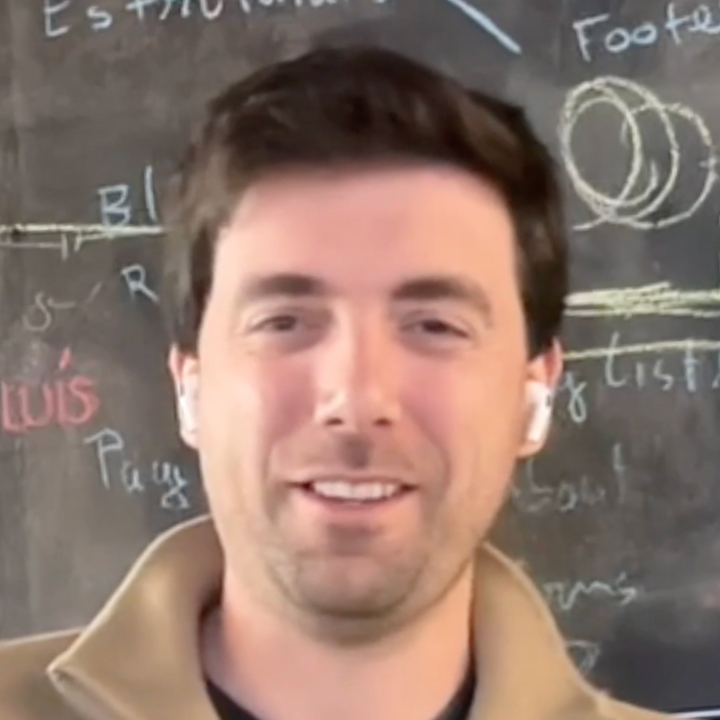
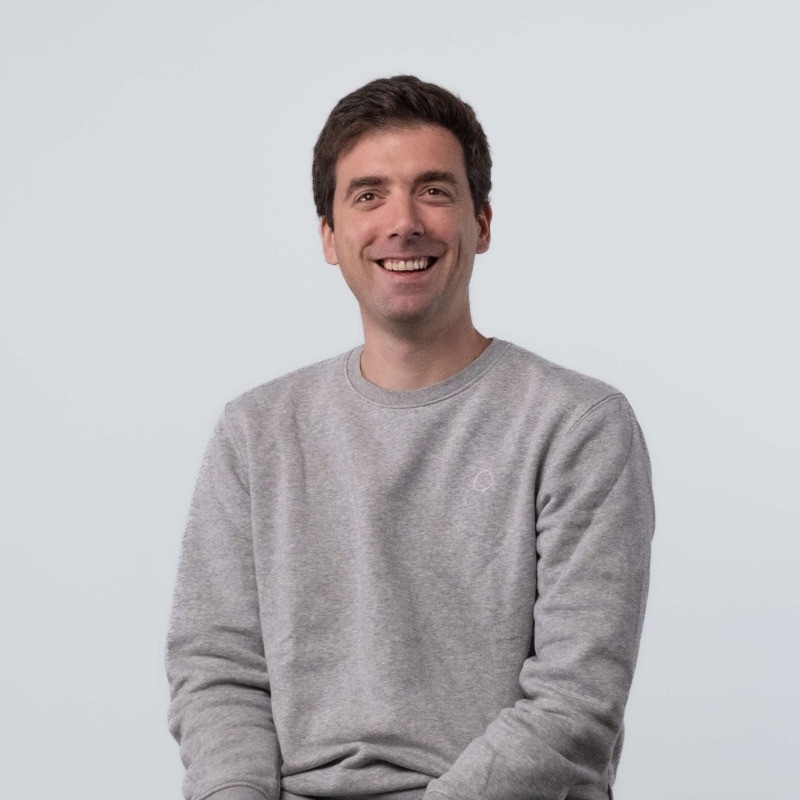
Most agencies take every project they can get. Significa has said no for 10 years straight. In this episode, Diogo sits down with Rui Sereno, CEO of Significa, a strategy, design and development agency based in Porto. They talk about what it actually looks like to build an agency around values, not just talk about them. Rui breaks down why they only take projects with a design component, how they cap the team at 40 people on purpose, and why they turned down a €1.3M contract mid-project because the client wasn't worth it. They also get into the merger with Collective, competing against Deloitte on enterprise deals, why the whole team shows up to the office every day, and the marketing challenge keeping Rui up at night: how do you consistently appear when someone asks an LLM who the best design agency in Europe is.
Transcript
Diogo Dantas (00:01.474)
Hi Rui, thank you so much for joining me today. Why don't we start by, who is Rui and what is Significa?
Rui Sereno (00:11.341)
So I'm Rui, I'm currently the CEO at Significa. I'm also arguably one of the founders and I'll come into that in a bit. We are a strategy design and development agency and we actually became 10 years this year. So we started in 2016 or
Pedro is one of the partners who started the company in 2016, very informally, as a graphic design agency right out of university. We all studied together, me, Pedro and Andre, and that is the other initial partner. We all studied together. We had separate paths in our careers at the time, but then eventually it made sense at one point for all of us to sort of...
come together and start working in the same things. That's what we did at the time, still as a graphic design agency, even though that was really brief. Now we talk about AI, but at the time the discussion was centered about digital design or graphic design and what would be the path and the route.
for your normal graphic designers that do books or posters or business cards, brand identity, that type of stuff. And we decided that the right thing for us to pursue would be UIUX at the time, which we decided to do and to completely break the relationship with the standard graphic design and pursue digital. And gladly we did because from there,
We got our first client, which happened to be from the US and kind of everything made sense. We hired our first developer soon after and then from there it was, we grew.
Diogo Dantas (02:14.798)
out of curiosity because that's also a question that come up quite often with us because our client bail that we are based in kind of Portugal how about we work with US clients or how that started so with your first client being US based all that all that happened do you remember
Rui Sereno (02:37.913)
I think if I remember correctly, was through Dribbble. Dribbble was big. Then I don't know if it is big still. It used to be for us and for some of the agencies like us, it was big. It was a massive source of leads for all of us. And I think it's fair to say that some of us exist because of Dribbble and how big Dribbble was. And naturally Dribbble's audience was mostly from what I know.
Diogo Dantas (02:47.566)
Yeah.
Rui Sereno (03:07.405)
American and therefore naturally the leads came from the US. At the time the dollar wasn't as bad as it is today so that it was actually advantageous for them to work with us in a sense and the cost or at least our cost for them was relatively cheap so it was kind of a win-win situation for them. They would get quality, would get relatively cheaper prices and so it was perfect.
Diogo Dantas (03:10.284)
Mm-hmm.
Diogo Dantas (03:35.618)
Yeah, makes sense. Of course. Of course. And you mentioned that you make like a it's kind of a bold decision when you have to kind of decide for a specific service or vertical, and then you kind of, feel like you are missing out on everything else. And past that decision of focusing on UX, UI,
Rui Sereno (03:36.023)
for them and for us as well because it was good money.
Diogo Dantas (04:01.235)
not long after founding the company, how have these services evolved over time? Because that time was UX UI, now it's not only that.
Rui Sereno (04:12.139)
No, it's quite a dense and nuanced topic for us. So that was the first big decision we made, but we've done others over the years that kind of beat us in a way. So one of the things that is also key for us and still is, and it's not going to change, is we only accept projects that have the design element in it. So if a client comes to us and say, we have development, we have this massive development project that we wanted to take.
Diogo Dantas (04:25.453)
You
Rui Sereno (04:41.983)
We will not take it because there's no design to it. So we only implement or develop it being front and back end or any other services, you know, paired with it. If there's design, the design is that big for us. And that's why we say we're design light. And that's one of the, one of the biggest decisions we made, because as you can imagine in 10 years, we got leads with relatively big sized budgets
Diogo Dantas (04:57.143)
Cut it.
Rui Sereno (05:11.629)
for development only projects that made us still stay truth to our values and say no. Even though financially it was probably a bad decision, our values matter to us more than just the financial aspect of things and I know this might come across as a little bit of a cliche, but it's actually the reality, it's actually the truth And we've been doing that over the years. There's more like the one of not being more than 40 people is also one that we stay
true to. So yeah, I mean, the values are relevant. Obviously, there are moments in which we sort of question ourselves and wonder if that was actually a good decision. But I think that's normal. Anybody that runs a company or is some sort of decision making responsibilities, you always wonder if you made the right decision or the wrong decision and now what type of impacts that will have in your business.
whether they are positive or negative. So yeah, it's kind of sometimes difficult to navigate that element of ambiguity in a way, because it's ambiguous, right? It's always ambiguous.
Diogo Dantas (06:24.449)
Yeah, for sure. Why did you decide to only develop things that you designed? Is it quality related?
Rui Sereno (06:33.997)
Well, quality itself is also a little bit of abstract, right? Because what I find to be a really good design for you might be not that good. So quality is a bit abstract in itself. So it can be, you you can interpret it as the quality of design and then how you measure the quality of design or you can measure quality by the level of satisfaction of your clients or the level of satisfaction of the team or a mix of everything. So it's not only quality, it's just
our way to value because one thing is you praising that design is really important and you care a lot about design and the user experience and what people feel when using a product or a website or an e-commerce that you've designed. One thing is preaching this and the other thing is actually practicing that. our design to us is just the starting point of that belief that, you know, user experience is really important and design to us is just the beginning. So I'm not saying design is the only
aspect that matters for a user experience, which is not. It's far beyond that. But it's the starting point and perhaps the most important one.
Diogo Dantas (07:43.264)
Yeah. Cool. And in the early days, you mentioned that you and the two other co-founders or partners, you studied together, you went to university together, right? So I'm assuming that you were also a designer back then. And you became an agency kind of co-founder partner. What was the transition like?
Rui Sereno (07:54.765)
Mm-hmm. Yeah.
Rui Sereno (08:00.481)
Yep, it was. Yeah, it was really bad.
Rui Sereno (08:13.079)
fake it until you make it and we haven't made it yet so we're still faking it.
Diogo Dantas (08:15.371)
You
Diogo Dantas (08:19.521)
When do you think that you, following up on that, when do you think you will make it?
Rui Sereno (08:25.425)
I think you never make it. think ambition, so our ambition as you know is not to grow beyond the 40 people, but the ambition lies more on the quality, regardless of what it is, on the team. So for example, one thing that I say all the time is you can grow financially as a business without growing in size. Obviously it's more limited, it's capped at a certain threshold, but you can still do that.
Diogo Dantas (08:27.095)
You never.
Diogo Dantas (08:55.831)
Mm-hmm.
Rui Sereno (08:56.183)
So we still want to grow financially. We still want to grow in terms of the quality we do. We still want to grow in the services we provide. We still want to improve in how we address clients, how we treat them, how we care for them. So all of these things are part of doing a business that to us are more important than just growing beyond the 40 people. one of the reasons, obviously the culture is the main reason.
and why we don't want to grow beyond the 40 people. But at the same time, it's because we feel that, and we've always done this across every aspect of the company, is if we ever go beyond the 40 people, it has to be in a structured way. So I need to feel that we have all the foundations laid down right for us to be able to scale that far or beyond that point. And I know I'm really demanding in everything in terms of
how professional we do things, how we communicate, how we iterate, how we present proposals, how we do all of this stuff. And I really want to get it done right, like to the best possible, in the best possible way. And we're still working to get there and I think we'll forever be. So yeah, we'll never reach, to answer your question, we'll never be there. And I think being always unsatisfied.
It's in a way what defines us still.
Diogo Dantas (10:25.281)
Yeah, that's a good one. And a lot of agencies end up in informal partnerships over time, sometimes like sharing an office, sharing clients, referrals in general, without ever really kind of formalizing that relationship in specific terms. I read somewhere, I'm not sure if it was on your website, that you...
Rui Sereno (10:40.877)
Yep.
Diogo Dantas (10:54.655)
You live that in a way with Collective, another company, that eventually things went probably not the best route. And then you guys actually decided to do a merger not long ago, probably around three years or something like that.
Rui Sereno (10:59.073)
Yeah, yeah we did.
Rui Sereno (11:07.373)
Yep.
Rui Sereno (11:13.613)
Now it's more as 2020, 2022, I Well, I might be mistaken, yeah.
Diogo Dantas (11:17.581)
22? Okay. No, that's fine. Um, so why, why the decision to merge at the end of the day? When may that happen?
Rui Sereno (11:21.801)
I think it was.
Rui Sereno (11:29.015)
So historically, one of our weakest suits, I would say, was project management. Originally, we come from a very creative background. Myself, my partners, and everyone that we hired, everyone comes from very creative backgrounds. And I know this is also come across as a little bit of cliche, but creative people tend to be really unorganized, right?
And that's precisely the opposite of what you need from a project manager. So we were always, I won't say really bad at it, but that was definitely something that we couldn't do as well as we wanted to.
At the same time, in the early days, we didn't have any development or we have, you know, we had one front end developer and that was it. And we actually landed our first full product design development, project management, some bit of strategy back then, but we didn't have the resources. That's the fake it until you make it. that I was talking about. So when I closed our first front end development, our first project with
front-end in it, we didn't have a front-end developer, and then I closed this project which had backend development and we didn't have any backend developers. So it's always been like this over the years. And this is the old question that comes first, is demand or offer? So in our case, always been demand and never the offer. And through another client and a friend that worked for another client, he knew this guy.
Diogo Dantas (12:57.73)
Yeah.
Rui Sereno (13:08.749)
He was at the time living in Switzerland. He wanted to start his own agency. was a front end developer slash software developer. studied engineering in university and he was looking to come back to Portugal and start his own agency. And that agency became Collective. And he had friends who went to university with him that were willing to join his company in case he would start one. And then
We find out about this, we talked to this guy. We had a project for him right off the bat, which was that project that I had just closed. And it was the perfect excuse for him to get started with it. So we did, we did that project together. We shared an office back then. And then from there, many other projects came where we worked on them together over time. Then we built this office together as well.
But there was always some sort of cultural differences between the two companies that for some people were harder to overcome than to others. for their team, it wasn't necessarily an easy thing to deal with. So they decided to part ways. And we followed our own separate paths. For us, it meant hiring back end developers that we didn't have any. And for them, probably meant hiring designers and front end developers.
Unfortunately for them, it didn't work as well as they envisioned it would. And they were prepared to sell the company to an American company, I think. I'm not entirely certain, to an American company. And then I heard about this, I called Tiago, who's now a partner of Signifiqui, and said, if you want to sell, just sell to us. Because you have the skills, you have the project management.
Diogo Dantas (15:02.166)
Yeah.
Rui Sereno (15:04.833)
capabilities that we lack. And I think it would make sense. know, probably some of your team will not necessarily be happy, but know, business is business at the end of the day. And yeah, that's how we became, how we sort of part ways and then merged a few years later. Unfortunately, some of the team that were with them before the merger is no longer with us. So I there's three people left. I hope I'm not mistaken, especially if they hear this.
I think there's three people left. But that's just life, that's what it is. So yeah, we made that. It's working now for four years.
Diogo Dantas (15:42.07)
Sure, it's part of it.
Diogo Dantas (15:47.627)
Nice. Actually merging and kind of selling it just is, don't think it's that common in this industry. At least not in Europe, I would say. In the US, I think it's a bit more common. At least that's kind of my feeling.
Explain me like I'm five.
Rui Sereno (16:07.447)
We've we've been, we've been, no, sorry, we've been, we've been approached a number of times over the years, but more recently, more frequently by some bigger agencies or groups of people that own agencies trying to create this super agency. And we've declined all of them, but that has happened quite frequently lately.
Diogo Dantas (16:20.427)
Mm-hmm.
Diogo Dantas (16:30.101)
Hmm.
Diogo Dantas (16:35.772)
Okay, interesting. And are those Europe based like those people are those companies are interested like those big? Okay. Interesting.
Rui Sereno (16:41.473)
Some, yeah. Some, No, but Ueno, was, it still is, and they're coming back, a big reference for us. They got acquired by Twitter. Accenture bought one of them, one of the big ones. It wasn't us two. Was it? Well, Accenture just recently bought one of these big agencies like ours.
Diogo Dantas (16:49.598)
Mm-hmm. Yeah.
Diogo Dantas (16:54.827)
Mm-hmm.
Diogo Dantas (17:09.813)
Mmm, juicy.
Rui Sereno (17:11.149)
I wouldn't say it is uncommon.
Diogo Dantas (17:17.9)
I'm actually interested in understanding which one they bought.
How do you, like, an agency being, in this case, being acquired, for example, how do you go about it? How do you start thinking about it?
Rui Sereno (17:36.245)
I don't know. We were never acquired. We were never acquired. We said no to all of those offers. Because then again, some of the offers made us think. Some of the offers made us think. But in the end, and then again, staying truthful to our beliefs and our values, culture matters more at this point.
Diogo Dantas (17:43.68)
Mm-hmm.
Diogo Dantas (18:03.243)
Mm-hmm.
Rui Sereno (18:04.073)
And we still believe we have a lot to grow. Then again, not in size, but in terms of quality of service, we still have a lot to grow and a lot to offer. So we're not ready for that step yet. And I don't know if we will have a big, but.
Diogo Dantas (18:07.242)
Yeah.
Diogo Dantas (18:17.964)
Yeah. Can always be an option and you can also optimize for that, but might never happen.
Rui Sereno (18:29.797)
I'm positive it will be an easy way out for us and it will be relatively easy to accomplish if we want to.
Diogo Dantas (18:34.496)
Mm-hmm.
Diogo Dantas (18:40.416)
Yeah. Great. That's a good sign when outsiders want to buy your company. Of course, there is a lot that comes into that process, but they poking you is already a good sign. Let's talk a bit more in terms of the intentional size. You already mentioned a few things on
why or maybe the most of it, not sure if you have anything else to add that you want to cap it as 40 people unless you feel like you are prepared and you have everything in the agency ready to go over that. Why 40 people specifically? Why not 25 or 30? Have you felt that?
Rui Sereno (19:30.699)
Yeah. So.
No girl, you go.
Diogo Dantas (19:37.062)
I was just trying to say like have you felt that once you reach 40 people that's when things started kind of breaking down and I'm like and you're like, okay This is kind of the limit Let's fix the house now and let's cap here
Rui Sereno (19:51.853)
No, it's a bit arbitrary in a way. And things have broken down plenty of times before. So it doesn't mean that it gets to 40 is going to get worse. Things have broken down. I don't think it relates necessarily just to the number of people because being 40, 41 or 35 or 45 is probably going to be about the same. So they have broken down. There's been issues with the team, with culture, with...
Diogo Dantas (20:02.476)
Mm-hmm.
Rui Sereno (20:20.269)
team happiness. those kind of things are normal and it's really hard to maintain over the course of 10 years a continuously super happy team across the board. And the same applies to projects. Most of our projects go really well, I must say, but there's problems in them too. And it's really hard to maintain the same level over time very, very consistently. We try to do the best as we can, but there's always...
Diogo Dantas (20:38.399)
Mm-hmm.
Rui Sereno (20:47.113)
ups and downs. And I think if you have to summarize the life of an agency in a sentence would be up and down. It's the same for sometimes you have too much projects for the team size and sometimes you have too much team for the number of projects. And that's a constant up and down. It's never balanced. And the same applies to everything else. The reason for 40, even though it's a little bit arbitrary, is
So in an agency, typically split between two types of resources, right? So have your billable people, which is the people that actually work on projects and generate revenue for you. And you have the non-billable people, which is the people that, you know, opposite to the ones that generate revenue that are just passive resources. And I say resources, but I have no, it's not in a harmful way. You know, some people might get.
Diogo Dantas (21:23.326)
Mm-hmm.
Diogo Dantas (21:31.884)
Yeah.
Rui Sereno (21:44.397)
a little bit triggered by me calling them resources, but it's not in a harmful way. That's, you know, I can change the people. So, and so to us, the balance is the balance breaks on 40 people. So for the structure that we have in terms of this ratio between billable and unbillable 40 is the ideal scenario or is the ideal number.
Diogo Dantas (22:09.13)
Mm-hmm.
Rui Sereno (22:12.471)
for us with the amount of effort that we have to put in marketing, in sales, in operations, in HR versus the amount of billable people, that's the perfect number. Financially, culturally, everything, right? So that's one aspect. We have all this sort of maths figured out in terms of the rates that we have to do versus to sort of calculate and margins and everything for this amount of.
non-billable people. And then there's the culture, right? Because if we were currently 36, I reckon, and now with the amount of people that we have, we already have some cultural struggles, naturally have people from different backgrounds and it's hard to maintain. And sometimes it's hard to maintain quality, it's hard to preserve quality, it's hard to oversee projects.
Diogo Dantas (22:44.138)
Mm-hmm.
Rui Sereno (23:10.475)
And then again, quality has always been the thing that we look up to and the thing that we chase. And we feel that if we go above a certain threshold, controlling quality will be much harder.
Diogo Dantas (23:24.8)
Yeah. No, that makes sense. pushing on the, on the culture. I read that you have like a, an office for us approach, when it seems like the, or a big part of the, the industry is going a bit the other way. I think it got worse, of course, for obvious reasons during the pandemic and post pandemic, everyone thought like, Hey, this is, this is the dream.
But then after some time, like the dream is not that attractive anymore. But you were always pushing for office first, right? Why is that? And why is that?
Rui Sereno (24:04.001)
Yep, we still are.
Rui Sereno (24:11.191)
So first because we, so there's a couple of things that are also relevant to mention. The novice first might or will change with AI, unfortunately. And it really, so we're still, know, in some things are still uncertain where AI will lead us, but we're kind of slightly changing the novice first approach in a certain way.
So the reason why we did it in the first place was mostly with the designers. And I think we'll stay true to that when it comes to design because, you know, honestly, it's the area that we control the better as partners and that we can... So I used to say that we can take anybody and make them a good designer. And I know this is a little bit arrogant of us, but I think we can take anybody.
a designer or non-designer background and make them a really good designer. And that's why we hired and we always hired junior people first for design department. For engineering, it's kind of changing. I reckon if you look at the job post that we have, both of them refer to senior people. At the same time, it also related to the man, right?
So if I need to hire someone really quickly to jump in, take on a project, as soon as they get on boarded, then it has to be someone who's slightly more senior than what we usually hire. So it's a trade off of elements always, right? There's no black and white and you always go for novices, even though we privileged that over the years. Now, what was the other question? Sorry, because...
Diogo Dantas (25:53.461)
Mm-hmm.
Diogo Dantas (26:00.501)
So the question was mostly about the decision of going office first. Why not remote?
Rui Sereno (26:06.645)
Yes, okay.
Yeah. So firstly, because we, maybe it's just a dream. We like people that work with us to like each other and to like being in the office and being with us and to create this environment of togetherness that we like a lot. And I think it's purely related to that. So it's nothing to do with controlling people or any sort of micromanagement.
in any way, or form is purely related to liking to have people around and being around people. And it's easier to iterate, discuss when you're in person with somebody. There's something that Pedro, one of my partners talks a lot, which is serendipity. And serendipity only happens if you're there and then at the certain moment in time. If someone is discussing whatever project they are and someone is just walking by and
overhears what they're talking about and then chimes in with very interesting stuff or very interesting contributions, that would have been lost in a remote environment. And the proximity between us allows us to be in this environment where on my side, there's designers discussing stuff. And if I want, I just give them my opinion. And anybody's invited to do that, regardless of who they are. And that type of spontaneity only happens if you're in person.
Diogo Dantas (27:29.524)
Yeah.
Rui Sereno (27:36.009)
And we believe that contributes to the quality, the tone, the emotions, everything in a project, it being design, strategy, development. anything.
Diogo Dantas (27:48.147)
That makes sense.
Rui Sereno (27:48.973)
Because if you're at home, if you're at home and if you're an engineer, for example, or a designer, you might be banging your head against the wall because you can figure something out. But if you're in the office or you have to call people and then you don't know if people are going to answer or not, you know, there's not that connection. Whereas if you're in the office and you have problems, just poke the people next to you or the multiple people next to you, gather them around and discuss that problem. It will be fixed much faster and probably much better. So that's why office is important to us.
Diogo Dantas (28:10.091)
Mm-hmm.
Diogo Dantas (28:15.891)
Yeah, yeah, I agree.
Nice. And we briefly talk about AI. And you also discussed that it's changing a little bit the role, a bit about everyone, like engineering, designers. But for designers specifically, since you guys are design-led, and I think it's easier to think about how AI is impacting the workflows of engineers, because that's kind one of the main things.
Rui Sereno (28:31.713)
Yep. Yep.
Rui Sereno (28:39.949)
Mm-hmm.
Diogo Dantas (28:48.317)
or where AI started was kind of to improve the developer job. But AI is also changing kind of the role of a designer in a project. When you are hiring now for a designer role, what AI things do you have in mind or are looking for when a designer, if any?
Rui Sereno (29:01.389)
Mm-hmm.
Rui Sereno (29:15.649)
Okay. AI is going to change not only the work, at least for us, not only the work of designers and developers, AI will change the work of everybody. What AI is going to do is it's going to somewhat level the playing field in a way. So anybody now can do a very complex document about any topic.
Diogo Dantas (29:36.682)
Mm-hmm.
Rui Sereno (29:42.965)
without any knowledge about that and just pretend that you're really good at it and you know what you're doing. So anybody can do this right now. Which in a way is really good, but it's also really scary because you never know actually who's on the other side. And the same applies to designers, copywriters, developers.
Anybody. for example, for developers, we used to do a code challenge as part of the hiring process. Now there's no point because anybody can do that with AI. And the AI is getting really good in terms of code quality. It's clearly not made by a very good human or in the same way a really good human engineering does, but it's still really good. So there's no point in doing challenges anymore, at least yet. So we're completely skipping that part.
Diogo Dantas (30:34.591)
Yeah.
Rui Sereno (30:36.117)
as part of the interview. I don't think it doesn't change much in terms of what we look in a designer. never, historically never look for someone who's really good in the visual aspect of design itself because we know we can sort of mold that person and train that person to be that. So we always look for people that can think beyond design.
that can think product, there are clever people that can have discussions that go beyond just the visual aspect of design. So it doesn't change a lot because anybody that is clever enough, is intelligent enough, will be able to adapt to whatever reality is thrown at them in a design process. now we see some candidates playing with AI and doing prototypes with AI and obviously we...
Diogo Dantas (31:13.714)
Mm-hmm.
Rui Sereno (31:33.815)
privilege that or we tend to appreciate those because it's part of our process no matter what AI will be there in terms of speed of execution, efficiency, the quality of the deliverable, not in terms of the actual design element and how well it looks and how well it works, but how you present it. Now, for example, instead of doing female prototypes, which are always really jammy and bad to navigate through, now you can just do that with AI.
Diogo Dantas (31:53.972)
Mm-hmm.
Rui Sereno (32:03.809)
give the AI Figma and it creates a fully clickable prototype for you. So in terms of the client experience of receiving that prototype, and even developers too, of receiving that actually working clickable prototype is much better. So the quality of that delivery becomes suddenly much better. So to answer your question, didn't change the way we interview people or what we look for in people because we've always looked for the clever.
Diogo Dantas (32:17.746)
Yeah.
Rui Sereno (32:33.494)
intelligent, well-rounded people more so than a really good visual designer.
Diogo Dantas (32:42.852)
makes sense. Yeah, makes sense. AI is not everything. Usually there is that quote that we should touch a bit of grass. Changing lanes a bit.
Rui Sereno (32:53.409)
Mm hmm. Yeah, of course.
Diogo Dantas (33:01.446)
On your, I think it's on your playbook or the handbook where you mentioned that you don't like to work with jerks. I don't think nobody does, but I would like to maybe ask you, if there is a particular moment that you had to deal with that and how you handle that, because that's kind of usually one of the struggles, in someone.
Rui Sereno (33:10.369)
No.
Diogo Dantas (33:28.18)
that has the position that you have, which is like firing clients, when do you fire clients or how do you handle like not so aligned clients that sometimes you are not able to know before you get started actually on the job.
Rui Sereno (33:44.299)
Yeah. it's hard. And then again, there's back to the ups and downs. There's moments where you can be a little bit more picky with the clients that you accept and there's moments where there's less projects that you need to sort of take what's there to be taken. Now, in terms of firing clients, I think that has happened twice in the past over the course of these 10 years.
Diogo Dantas (33:57.182)
Mm-hmm.
Rui Sereno (34:13.741)
And there's one case that I actually dealt with this morning that is kind of getting there. All of them for very different reasons. So the first one, I think it was a Chief of Products, a very big startup. They just had raised 300 million euros in a massive round. They were loaded with money. We had an agreement to extend the collaboration for the next year.
I think if I'm not mistaken at the time it was a 1.3 million deal for the following year, which for us would be awesome. The team was set, everything was set, but then the chief of product on their side was being a jerk to our team in terms of completely unrealistic demands and expectations and the way he communicated and the way he wasn't involved.
but then when he was, he was just to completely bash everybody, not only our team, but their team as well. And I had to, I wasn't even involved in that project at all. I was just in Slack sort of trying to understand what was going on there. And then he had to me that there was a point where he'd hit a limit where I had to call him and say, I know we have this agreement for next year, but we don't want to work with, you know, in this sort of circumstances with these types of.
It's not a collaboration. We're fighting about things that are not even reasonable. So I think we're calling it off. We don't want to work with you. So in our contract, we have one month to notice. And I pulled that clause and I said, look, we're done in a month and we're done for good. And that's how it ended. And we lost a lot of money there. But I think the trade off was hopefully...
Diogo Dantas (35:42.472)
Mm-hmm.
Diogo Dantas (35:59.476)
Yeah.
Rui Sereno (36:07.565)
for the team, made their lives better because it was miserable back then. And then there's a couple other cases, the second case, they were just terrible clients, very, very rude across everything. I had to, so they still owe us some money.
But in order to terminate that as abruptly as I want it to be, said, look, we don't even want that. Just, you know, go away. Don't want to work with you anymore. That's fine. You don't have to worry about settling that bill. Just, we don't want to work with you. And that's how it went. And now there's one who's clearly trying to take advantage of us, of the team, of the good faith of the team. And I think in a way of our...
Diogo Dantas (36:34.066)
Hmm.
Diogo Dantas (36:50.501)
Yeah.
Rui Sereno (37:03.277)
continuous attempt to pursue the best possible product and outcomes and I think he's trying to take advantage of that us and I had to jump in and say look we're not gonna do anything beyond beyond now so if you want to do this these are terms otherwise just f off
Diogo Dantas (37:25.866)
That's a good position to be in because sometimes agencies have no other way. The client is so important or the payment is so important that they have to deal with that. think you having that not only applies to business but also in life. What money gives you is kind of options. So having that option is a good place to be.
Rui Sereno (37:49.801)
No, it's sometimes, but the harder, I would say that's obviously a good position to be in. But more than that is, because at the same time, don't want to be unfair to anybody, right? So you don't want to be unfair to the team. You don't want to be unfair to the client. So it only comes to that point when it is absolutely unquestionable that someone is wrong. And there were times in which I believe we were wrong. So.
And perhaps the team were complaining about the client, but from my understanding, the team was wrong. And I spoke to the client, I spoke to the team or somebody did. So the hardest part to navigate is actually dissecting who's actually wrong, or who's actually right, or if there's anything that we can do to make it right and to fix it more so than taking the. Terminant approach of, you know, this is done. We're not moving on.
But yeah, I would say most projects have at one point or another a bit of friction, whereas the team isn't happy or the client would like things to have been done differently. And that's normal. It's just how you navigate this with everybody and the stakeholders of every project and how well you can actually handle this from an account management standpoint and the resource and human resources standpoint.
Diogo Dantas (38:50.527)
Yeah.
Diogo Dantas (39:11.486)
Yeah, that's good. I think I would like to discuss a bit of the topic that is not very common to see as well in the agency world, which is having such an open playbook or handbook, like open for everyone.
Why did that happen? And where do you think that helps? Because you could keep that if the intention was to just help the kind of, if it was like an internal document, you could keep that in Notion for example, and the internal team would perfectly know where to go to. Why making that public in such a comprehensive document?
Rui Sereno (39:48.245)
Yeah. Mm-hmm. Yeah. Yeah. So...
My stance and my personal stance on this is if you say you're transparent, just be transparent and that's where we come from. Obviously there are other things that are relevant as part of having this piece of documentation public, which is we use a lot of those pages as reference in proposals that we make both for new...
candidates and for clients and it's kind of our knowledge base. So if a client asks what's our rate and there's a page rate, right? So we're not trying to take advantage of any client of any size, right? And that kind of keeps us grounded and bound to what the truth is. And I know that, you know, in some cases, for example, if there's a very big
Diogo Dantas (40:36.852)
Mm-hmm.
Rui Sereno (40:53.601)
company which you know has loads of money or is a massive budget and perhaps you you could take advantage of that and increase your rates in that case. So we don't do that. And The handbook keeps us grounded to those types of things. So our rates are the same regardless of your size, regardless of your, regardless of your business. The only exception to us is either our fellow B-courts or NGOs.
Diogo Dantas (41:05.193)
Mm-hmm.
Rui Sereno (41:22.189)
to whom we have a 25 % discount in our rates as part of our CSR contributions. But that's all. Otherwise, the rates are the same. And then naturally, they get negotiated in some projects, depending on length, size. But yeah, the handbook to us keeps us grounded and keeps us, yeah, I think it keeps us grounded.
So if it is there, if it is public, we need to keep up to it and live as if the handbook is always looking at us from above and say, you're not doing this right, or you're not being ethical in this element. So that's what keeps us grounded to those principles of ours.
Diogo Dantas (41:58.347)
Yeah.
Diogo Dantas (42:06.718)
Nice. That's a good reason to have it public. That lead us to the topic of kind of business development, which is key for any type of business. And
Rui Sereno (42:23.425)
Yeah.
Diogo Dantas (42:26.89)
One thing that I don't also that I don't see often discussed about is kind of actually what works for specific agencies, because there's a lot of things to get to it in terms of business development. In your experience over the last 10 years, what do you guys tried that worked in terms of outbound? Because inbound, of course, you guys earn awards, which is always nice for industry recognition, but also like
Rui Sereno (42:37.185)
Yeah. Yeah.
Diogo Dantas (42:56.116)
people getting to know you and after some time maybe converting to a lead. But in terms of proactive outbound, as you mentioned, there are down times where sometimes you need to do something about it, right? Not just waiting on the next lead inbound to come. What has been working through the years for you guys?
Rui Sereno (42:57.997)
Mm-hmm.
Rui Sereno (43:03.883)
Mm-hmm. Mm-hmm. Yep.
Rui Sereno (43:13.901)
So it's a very, it's perhaps the most complex question because I think in a business like ours, everything is business development. When I mean everything, I think I'm convinced I mean literally everything because the best business development you have is the quality that you deliver.
because if you increase the willingness of someone to speak highly of you, and by someone I mean clients, that's the best business development you can have. So in itself, that's why we care so deeply about the quality of what we deliver, how we deliver, when, how we communicate. All of these things are really dear to us because we firmly believe that the best salespeople we have are the clients that are happy with our work. And it goes to the extent of we do
Diogo Dantas (43:48.317)
Mm-hmm.
Rui Sereno (44:10.285)
client experience service. So every once in a while, over the term or the course of the project, we do service with clients and we have someone who's dedicated to actually conduct the service, talk to them, understand what problems and what's been happening with them. And we measure the NPS. So we know numerically, yet quantitatively, how well we're doing with our clients. And that's our way of measuring.
the quality of our service and the quality of what we do, which is how satisfied the people that we work for actually are. Now, if all of this goes well, and there's a quote that I really like, which is the best marketing is having no marketing, which if you do these things really well, you'll need no marketing whatsoever. Because as I said, people will speak highly of you. They will refer you to other people in your business.
Diogo Dantas (44:58.247)
Mm-hmm.
Rui Sereno (45:08.737)
depending on size, and mean for our size, will sustain on that. Now obviously we do marketing, we do content marketing, have SEO efforts, we have content writing efforts, we have all this stuff that naturally the reason they exist is because not only we have to be good at what we do, we have to seem good at what we do. And that's what will attract
Potential organic leads to come to us is the perception of value that they get from us Because the clients that work with us get the actual value but those that haven't worked with us They have a this perception of value and the job of marketing is to increase The perception of value that the outside people that haven't worked with us have of us and that's what the awards do That's what stuff like this do is to increase this perception
Diogo Dantas (45:42.44)
Mm-hmm.
Rui Sereno (46:04.033)
that we are trustworthy, that we are credible, that we do really good work and therefore increasing the chances of somebody who's just heard of us to actually get in touch with us and want to work with us. And that's the job of marketing. Now, in terms of outbound, we've made a really, I think, important strategic decision.
Two and a half years ago, much like the one where we decided to stop doing graphic design, we decided to stop chasing startups. It's a very volatile world. It's highly dependent or mostly dependent on the US market. So if the US market comes crashing, then the amount of leads you get are indexed to that aspect. If the dollar comes down,
Diogo Dantas (46:40.457)
Hmm.
Rui Sereno (46:57.301)
then the amount of leads you get also get reduced because the buying power reduces. That was very clear when the British pound, after Brexit, British pound lost a little bit of power and we used to work loads with UK customers, but when the British pound declined, they lost the power to work with us or the advantage of actually working with us. And So the decision that we made was,
Diogo Dantas (47:09.929)
Mm-hmm.
Diogo Dantas (47:22.729)
All right.
Rui Sereno (47:25.997)
we want to shift the focus to larger organizations and by larger organizations, I don't mean necessarily corporate, but I mean organizations that are structured, that have been in business for quite some time, that are more structured, and then naturally, you know, in the end, they're a little bit more corporate and along with that decision, there was also the focus
on e-commerce, which is something that we do really well and we haven't been, or at the time we weren't doing enough and I think we always had really, really good results, know, designing and implementing and doing e-commerce strategy and there's something where we can offer a lot of value to the clients that we work with. And these naturally, when you make such a big change, because we were used to work with loads of startups, that was sort of our bread and butter were startups when you make this decision,
Diogo Dantas (47:59.048)
Mm-hmm.
Rui Sereno (48:23.307)
the way you communicate, way you present yourself, the way you reach out to them, the way you present proposals, all of these things need to also change. So you need to up your game. And recently, and this I think is really insightful, most of the proposals or the projects that we won and lost, we've done so against Deloitte. So we're now competing at a level of...
Diogo Dantas (48:35.069)
Yeah.
Diogo Dantas (48:47.283)
Hmm.
Rui Sereno (48:52.717)
I don't even know what to call it at a level that is something that we haven't navigated before. So then again, we keep faking it until we make it and we've closed some of these deals, but we're competing with these massive, with these monsters, these dinosaurs for some of the projects. I can't name them because we're under NDA, but some of them are really big and in some cases we won.
Diogo Dantas (48:58.481)
Yeah.
Rui Sereno (49:19.019)
versus these big consultancy firms. In other cases, we both won and we're working together in some of them. So that's quite a big shift in all aspects, including communication. So different. So, I mean, we'd have probably a topic for another hour just talking about this. And that change also came with another decision, which is, now we need to, we never had anybody doing outbound sales.
But with a decision like this, we probably should. Fortunately, our pipeline is full, but we still need this safety net. Not the safety net, but it's actually different because the way big companies work is very different from startups in the way they chase companies to work with. There's always...
It's complex, then again, topic for another conversation that I'm happy to have with you. But now we're chasing those companies deliberately and we're going to events where we know they're going to be and we're doing that.
Diogo Dantas (50:25.138)
Mm-hmm. Yeah.
Rui Sereno (50:31.795)
us for the first time in 10 years we have outbound.
Diogo Dantas (50:33.969)
Yeah, now it's more intentional, right? So you can, you are not waiting, yeah, you're not waiting for them to find you.
Rui Sereno (50:38.413)
It's intentional. Yeah. And it's targeted and it's targeted. So we know exactly who we want to work with, the type of organization that we want to work with. And we're going after them specifically. So we're not casting a massive net outbound. We're not sending emails to every company saying, we offer these types of services. Cause then again, goes against our positioning. That's really lame in my opinion. And I think it positions you.
Diogo Dantas (50:55.763)
Yeah.
Diogo Dantas (51:01.608)
Yeah.
Rui Sereno (51:08.449)
below where you should be, or at least for us. So we're going after them in a completely different way that we still think is premium as we want to be.
Diogo Dantas (51:16.103)
Yeah.
Diogo Dantas (51:21.755)
No, that's for sure.
I also heard, no, already in the playbook that you guys, you build by package and deliverables, not by time. I'm not sure if that shifted since. let's talk about pricing and how do you guys structure, because that's kind one of the kind of challenges that I see running like a product agency is like.
Rui Sereno (51:38.613)
It depends. It shifted a bit. So, doggo.
Rui Sereno (51:54.826)
Yeah.
Diogo Dantas (51:55.049)
I'll use scope things first and then how you make sure that nobody, either you or the client is being hurt, one being overcharged, the other charging too little.
Rui Sereno (52:06.881)
Yeah, there's always an element of guessing because I firmly believe that doing estimates in software development is a mistake, right? There's no way you can estimate anything with any level of certainty that is above probably what, 50%. So it's really, really uncertain. The reason why we do this and the reason why we estimate is because we want to give the other side an indication of how much that's going to cost.
Diogo Dantas (52:35.529)
Mm-hmm.
Rui Sereno (52:35.745)
And that indication of what it's going to cost also depends on what you think their budget is going to be because if or tends to be. So, and we used to do that a lot. There were cases in which we just charged by the day. So we don't do hourly rates. do daily. Well, we charged by the day and they would be fine with it. And whatever the time, whatever time we spent, they'd be fine with it. We still have a couple of clients like this.
which is not necessarily project based, it's kind of a continuous type of relationship. For those continuous types of relationship, we have the monthly retainers, which in our opinion is what works best for these projects. But these monthly retainers usually only come after the initial engagement, after there's trust from both sides, right? Because I don't want to engage in a retainer with somebody that is a jerk or that I don't want to work with.
Diogo Dantas (53:05.724)
Mm-hmm.
Rui Sereno (53:35.981)
But now with this big corporate projects, we tend, because there's also corporate policy and each company handles this differently, we're leaning more and more towards going with fixed budget, which is something that agencies sort of preached against. We always preached against. But, and that's fine. I think it worked well.
for startups with hourly rates, especially when you were much cheaper compared to the other agencies out there. But now they were in a relatively different league in terms of the companies that we're targeting. We need to play their game. We need to adjust to their game. And in some cases, that means going with fixed budgets. And fixed budgets it is. But even though in that cases, we still
I don't want to say pretend, but we still try to estimate the scope of work. We still calculate this either with daily rates or monthly rates. And in the end, it results in a fixed budget. But yeah, the base is always these two types of rates and estimates done based on the scope of work. Or there's been cases, and again, so many variables.
Diogo Dantas (54:51.73)
Mm-hmm.
Rui Sereno (55:00.139)
There's been cases where there's been no scope at all and we actually help them with the strategy and the product definition element and we just engage in a retainer because either they were referred to us or the trust was implied or we worked with someone they knew. So there's been cases, I mean there's been cases for everything really.
Diogo Dantas (55:14.631)
Mm-hmm.
Diogo Dantas (55:19.272)
You're a flexible that means that you're a flexible, which is good
Rui Sereno (55:23.615)
Yeah, yeah. Sure.
Diogo Dantas (55:26.856)
Cool. And back to AI. Of course. Have you noticed any difference on the way clients perceive you as an agency? Like they come into you like expecting things that should be done faster, cheaper, or can even be done without you. Of course they...
Rui Sereno (55:31.469)
Of course.
Diogo Dantas (55:54.065)
specific parts without you maybe they want to jump ahead on the process something like that have you felt that
Rui Sereno (55:55.981)
Yeah.
Rui Sereno (56:01.537)
Yeah, we did. Both in existing clients, that now because AI exists, they think that everything should be much quicker. So I think we can be more efficient with AI. AI, think one of the great things about it is that it can make us much more efficient, especially in minor tasks. In big ones too, but especially in minor tasks, can make us much more efficient.
But now clients tend to think that with AI you should be 10 times faster at everything and ignore everything else. Which I mean, fair enough, but it's not always the case. So yeah, we're trying to navigate how to deal with it. know, my gut tells me that if a client comes to us and says, this should be done, AI could do this in five minutes.
Diogo Dantas (56:35.506)
Yeah.
Rui Sereno (56:57.975)
then I'd like our answer to be okay, then just take it and do it, right? But obviously we can do that. But that's what I think would be fair. Now, in terms of how we position ourselves and the expectations of those who come to us. So as I said, as part of that strategic shift, we changed the value we communicate and
Diogo Dantas (57:02.032)
Yeah.
Rui Sereno (57:26.739)
is beyond the code and the design itself. So AI can save you a lot of time in engineering, can save you some time in designing some things, can make you more efficient. But when it comes to other things, so strategy, product thinking, the integration, so for example, digital transformation stuff or consultancy stuff,
where you have to integrate multiple departments and data and you have different people involved for marketing, for operations, for all of this that we're doing with some companies. AI is an aid in terms of synthesizing all the information, but in terms of the actual thinking of what's going on in the motions and the processes of everyone involved and how can we simplify this and bring that into, as a consequence, into better products or into...
better converting e-commerce is that AI doesn't necessarily go into. And now we offer that value that goes beyond AI. And we're glad we made that decision two and a half years ago because we're less dependent, because we're now offering this as part of the scope of sort of range of services that we do that positions us as very clearly, we'll help you with the strategy with
Diogo Dantas (58:46.024)
Mm-hmm.
Rui Sereno (58:53.613)
transforming your business, obviously with the help of AI, and then also design and develop this for you, obviously with the aid of AI.
Diogo Dantas (59:05.448)
Of course.
Yeah, it has its part, AI, but it's not like the... It's not the AI that runs things. AI helps.
Rui Sereno (59:12.013)
No, of course.
Rui Sereno (59:16.109)
No, it's not. I mean, if it is the AI that runs things, then I think either you figured out the password for all of this, which then in that case, just let me know because I'd like to know that too. Or I think something is wrong at that point. AI still hallucinates a lot, makes loads of mistakes, requires proofreading, requires all sort of human...
Diogo Dantas (59:29.712)
No.
Diogo Dantas (59:33.916)
Yeah. Yeah.
Rui Sereno (59:45.323)
verification because the the
At a glance, it seems perfect. And the first impact you have with AI is, wow, this is incredible. I have a superpower now. I can do code. But then as you dig in and you get deeper into it, there are some things that AI cannot do that needs human input and human interaction and quality assurance and verification and all of those things. I mean, probably the feature you want, but for now, that's what it still is.
Diogo Dantas (59:58.96)
Yeah.
Diogo Dantas (01:00:15.004)
Yeah, no, absolutely.
Diogo Dantas (01:00:21.672)
Yeah, for the time being, think that's kind of one of the dangers. Today is like people getting super in love with the tool and the tech and the quick results that it gets, but then forgetting that it still makes a lot of mistakes and trusting that blindly. I think that's kind of the danger nowadays. But yeah, it's part of the... Everything is so new and everything goes...
Rui Sereno (01:00:39.767)
Yeah. Yeah. Yeah.
Rui Sereno (01:00:47.337)
Yeah.
Diogo Dantas (01:00:51.02)
evolves so fast, especially with in this, it is.
Rui Sereno (01:00:53.079)
Yeah, but it is a superpower, right? In the end, is. yesterday we were one of these guys, girlfriend, she loves plants, right? And she doesn't know exactly when to water them or feed them or all this stuff. So she just built an app with AI that integrates with this, this and that APIs. And she's not a developer. She's
Diogo Dantas (01:01:06.6)
You
Diogo Dantas (01:01:10.778)
Mm-hmm
Diogo Dantas (01:01:15.196)
Yeah.
Rui Sereno (01:01:21.033)
as far from tech as you can imagine, but then she built that and apparently it's working. So in the end, it is still a super power. The difference is whether you can use it in the production environment commercially in a reliable way or not. And so let's see where this takes us. But for now, I think it's still soon to be able to yield conclusions from any of this yet.
Diogo Dantas (01:01:26.641)
No it.
Diogo Dantas (01:01:37.255)
Yeah.
Diogo Dantas (01:01:46.554)
Yeah, Yeah, it's shifting a lot of things. It's an interesting time to live in. Let me just ask you the closing ones. I ask you this to every guest that we have on the podcast. So what is, in case you haven't shared yet, what is one of the biggest mistakes you have made at Significa?
Rui Sereno (01:02:21.645)
Tough question.
So I'm sure myself personally, in some case, I've probably been unfair to some people over the years. Sometimes part because of the pressure that sometimes we're faced as a business, as a company, and I may have been unfair to some people. In terms of mistakes, and then this is a personal thing, I think before the call started, I told you that I do not
Diogo Dantas (01:02:34.374)
Mm-hmm.
Rui Sereno (01:02:54.401)
tend to get pressured or to feel pressure a lot. And I think from, I think it's the same stance with the mistakes. I don't tend to stay stuck to those mistakes that we've made and then sort of being stuck with them and overthinking them. So mistakes happen and I think they happen every day. It's just how you learn from them and move away from them and try to change stuff. So if you ask me now, as you did,
One mistakes you made. I can't pinpoint one exactly that we did. But perhaps if you asked me this yesterday, probably I would have remembered because I did some yesterday, I'm sure. So yeah, honestly, I don't know. I don't have any of those glaring ones. I'm making an effort.
Diogo Dantas (01:03:30.246)
Yeah.
Rui Sereno (01:03:53.448)
I actually am.
Diogo Dantas (01:03:56.72)
No, that's all good. At least you have like a good approach to it mentally. That you know that it's going to happen and it's part of the process. You don't think too much about it.
Rui Sereno (01:03:58.752)
I love
Rui Sereno (01:04:07.949)
Of course, mean, yeah, enough.
Diogo Dantas (01:04:12.495)
Okay, last one, which is one thing that you're currently struggling with. And this question is in hopes that someone that is listening, that maybe it has like something to share that could help you find the answer or get a bit closer to solving it.
Rui Sereno (01:04:34.029)
So the types of things that I struggle with go beyond the projects because I'm not involved in the actual execution of the projects as much as I used to be. So now I'm much more involved with the marketing department and which includes sales and actual marketing and operations more so than the projects themselves. Now the one thing that probably
Concerns me the most and that we're trying to figure out as best as we can moving forward is SEO has been the big thing and everyone has been fighting for SEO and ads and whatnot on Google Now the one thing that we're trying to figure out is how is that? changing with the LLMs and we've seen a massive shift between
Diogo Dantas (01:05:28.423)
Mm-hmm.
Rui Sereno (01:05:32.429)
between, you know, I'd say even six months ago, the number of people that get to our website from LLMs compared to Google has completely shifted. So now there's a lot more people coming from LLMs. So what's on my mind right now, or on our mind in terms of the marketing team is how, what can we do to increase the chances of when someone asks an LLM who's the best, I don't know, design agency.
Diogo Dantas (01:05:42.991)
Interesting.
Rui Sereno (01:06:00.845)
in the world or was the best design agency in Europe that were there. They were consistently there. So there's always an element of uncertainty. So we don't know what the AI is going to answer. sometimes it appears to be relatively random or based on your context. It is based on your context and the memory it has of you. But how can we try to consistently be there in the LLM response? Or if there's even anything that we can do to make that consistent.
Diogo Dantas (01:06:06.983)
Mm-hmm.
Diogo Dantas (01:06:17.606)
Yep.
Diogo Dantas (01:06:31.141)
Mm-hmm.
Rui Sereno (01:06:31.338)
because we believe that the biggest source of organic leaves will slightly shift to the LLMs or the traffic will shift to the LLMs. So that's something that we're trying to figure out.
Diogo Dantas (01:06:45.029)
Yeah, definitely a struggle. Definitely a struggle that either some are thinking about or some are still not aware, but it's going to be a topic that everybody will battle for.
Rui Sereno (01:06:58.529)
Yeah, and there's another one which is, as I said, it's also a bit of a struggle, which is I think we're in a way, and then again, faking it until you make it or maybe some time of complex perhaps, which is sometimes we feel like we're punching above our weight in terms of the companies that we're targeting and the projects that we're targeting. So this is a constant struggle.
Diogo Dantas (01:07:22.32)
Yeah.
Rui Sereno (01:07:28.203)
which relates to, we addressing the meetings with this level of people and companies in the right way? Are we presenting proposals the right way? Are we addressing this relationship the right way? How does Deloitte do it? How does Hustoo do it? How do these big companies do it in these interactions with these completely different types of companies that we now interact with?
compared to the startups that we used to, right? So this is something that we're also trying to navigate and understand, but I think it's the type of things that you'll only learn from being there. And we're trying to be there as much as we possibly can to sort of have our sense and see how it actually works.
Diogo Dantas (01:07:57.127)
Yeah.
Diogo Dantas (01:08:17.731)
Nice. All right, that covers everything that I have to ask you, Rui. Thank you so much for your time. It's been incredible. Thank you so much.
Rui Sereno (01:08:24.173)
Perfect, thank you.
Likewise. If you want to do part two, I'm open for it. Just, you know, up to breaches.
Diogo Dantas (01:08:34.033)
Sure. Sure thing, sure thing. I wouldn't say no. I wouldn't say no, to be honest. Thank you so much, Rui.
Rui Sereno (01:08:37.815)
Thank you.
Rui Sereno (01:08:41.271)
Thank you. Thank you for your time. Bye bye.
Diogo Dantas (01:08:44.978)
Bye bye.