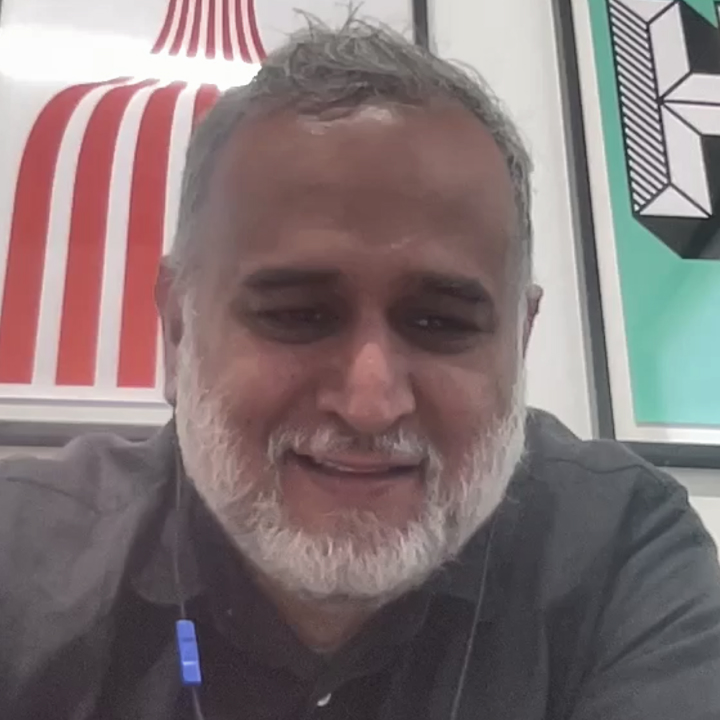
Ritik
,
Dholakia
Managing Partner & Founder
at
Studio Rodrigo
Episode
1
Growing a $3M+ annual revenue agency
Overview
Most studios play it safe and chase the work that pays. Studio Rodrigo built a 12-year business by being selective about both. In this episode, Diogo sits down with Ritik, founder of Studio Rodrigo, a 20-person digital product design and strategy studio based in Brooklyn. They talk about what it actually looks like to run a creative business on your own terms, the financials, the trade-offs, and the decisions most agency owners keep to themselves. Ritik breaks down how the studio does around $3M a year without maximising for profit, why they keep a network of freelancers instead of hiring up, and how they handle the uneven cycles of agency work. They also get into career growth in a flat organisation, what makes a good designer, and the one thing Ritik is still trying to figure out: how do you work on the problems that actually matter when your studio is built for screens?
Transcript
Diogo (00:01.007)
All right, Ritik welcome. As you know, this is our very first episode and I want to for a thank you for taking the time to join me on something that is nothing right now. These episodes will exist for a selfish reason. I want to find a, I wanted to find an excuse to talk with interesting and smart people that are in different phases than I am. And yeah, that's kind of the...
the opportunity that I created for myself to talk with others. So again, thanks a lot for your time. And why don't we get started by asking who is Ritik?
Ritik (00:42.574)
Yeah, totally. That sounds great. For the whomever listens to this, before I jump in, I'll sort of say, I'm always excited to talk to people that I find interesting doing cool stuff. So really happy to talk with you. Your team's been awesome as partners. And for the people who are out there, if they find this interesting and want to reach out, I'm always open to chatting with people as well. So they can reach me through the To Studio Rodrigo. And I'll put that at the beginning because...
who knows if they'll get to the end of it. So, yeah, just to give you kind of a quick overview, I'll tell you a little bit about myself and the studio that we run and maybe a bit of the journey. I know some of the questions that you wanna talk about are just sort of about how the business came to be and how we work on the business. So I'm Ritik, I'm based in Brooklyn, New York. I run a studio called Studio Rodrigo. We are a 20 person...
Diogo (01:13.421)
That's right.
Ritik (01:41.806)
digital product design strategy in Brand Studio. So our kind of lens on the work that we want to do is to help companies launch new digital products and services. And it's a fairly specific thing in the world of both design and technology in terms of what motivates us. So the kinds of work that we do just to give people who don't know kind of an understanding, it's very broad and that's sort of on purpose because I really just...
I'm interested in a lot of different things and want to be able to work on a lot of different things. So our kind of more, let's say, corporate work would be working very collaboratively with companies like Google or in the US Comcast, Peacock, Streaming Services, Spotify. And we basically work as sort of design partners for them. So they'll come to us and say, hey,
Right now we're seeing a lot of conversations of like, hey, AI, generative AI is creating all these new opportunities for experiences to be different. And we need to envision what these look like within the context of our services. So of course you have things like OpenAI doing this very broad chat based answer questions. But when you start thinking about, well, what does that mean if you put it inside of a...
media companies, streaming service, like you're not going there to answer questions, you're going there to be entertained. So there are still really interesting things you can do with a lot of the generative AI tools that might help someone kind of have a deeper experience with a show or a character or a brand that they love. And some of them are like things you could imagine and some of them are pretty radical and big open ideas. So that's sort of a fun part of kind of our.
are kind of bigger corporate work. And obviously, you know, as a business, those projects are good at paying the bills. They're interesting, they're fun. And I think one of the things that's really rewarding is that when either features or new apps or new products kind of launch with these big companies, you know, millions of people use them. So that's awesome, right? Just from the perspective of me and our team of designers.
Ritik (03:59.662)
On the other end of the spectrum, we work with a lot of very early stage startups, so people who maybe have raised a seed round or a Series A and they are launching in something new. We like to work in a few different areas that are defined very horizontally. So one set of areas is what I kind of think I characterize as problems in the real world. So things like healthcare, things like finance, things like...
even physical infrastructure, right? So these sort of complicated aspects of daily life for individuals or for companies that software can make better. And we tend to be very good at working with, you know, really smart founders to think about what should their brand be, what should their positioning and marketing messaging be, and then what should their apps be and how should they work.
And so we've done a lot of work in both healthcare and finance and infrastructure. And definitely in the last sort of, let's say five years, some of that has been motivated by new waves of technology, right? So computer vision, so machine learning, blockchain. And we're good at understanding what the potential and possibility of those technologies are and then how do they map to the reality of the real world, which is partly.
you know, understanding finance, understanding business, understanding healthcare, understanding people and how people want to interact with things. We also do a lot of work in what we call creator economy. So basically any technology platform that is helping creative people. And we define that very broadly. So everything from artists to writers, to people who make podcasts and stories, to people who maybe help people travel or people who cook earn a living. And that's just another area that motivates our team quite a bit. So.
The studio is very broad in that sense. We have been operating as a studio for about 12 years. We're based in Brooklyn. We're about 20 people. I came to the studio a little bit kind of through an interesting path just to me personally. So, you know, I graduated from university in 2000, so I'm old. And I actually studied economics and environmental science and I really wasn't in design or technology necessarily.
Ritik (06:17.806)
I went to a good school, Stanford, here in the US, in California. And actually, its reputation right now is the place where startups come from. When I went to school there in the late 90s, I didn't want to be a part of startups. I thought the startup culture that was there then was ridiculous. There's all of these companies that were just doing random shit and getting a lot of money. And I thought it was just sort of silly. So actually, I was looking at this environment.
sustainability, economics, like how do you think about climate change, how do you think about sustainable development? And kind of as a sideline, I was actually kind of writing short films and making short films with friends. And so, you know, I actually moved to New York in 2000 because I wanted to be in a city where people were writing and making kind of films and stuff on stage and things like that. But, you know,
you also have to make a living and pay rent and all that sort of stuff, right? So in 2000, you know, found my way to actually having left college saying I don't want to work for startups. Within nine months, I was working for a startup, right? And the startup was kind of in this world of where companies think about managing their kind of workflow and reporting around
sustainability and climate change. This was 20 years ago, right? So people were thinking about it. A lot of stuff hadn't matured to the level that it is now, and it's still a very tricky space to be in. But what happened out of that is that I basically, very quickly as a young person, 22 years old, kind of was put into this role called product management. And they were just like, hey, you're really good at...
thinking about what's the business problem, understanding the context. You're really good at talking and working with the software engineers and also the designers and people on the marketing side. So you're in this role in the middle of everything. And I was like, yeah, okay, this is interesting. I like this role, I'm good at it, and I like this aspect of being able to make things. I'm technical enough that I can...
Ritik (08:39.79)
talk with engineers about engineering things, but I don't want to code. I'm creative enough that I can help drive the creative process, but I don't design. And, you know, I I sort of do a lot of the other stuff that kind of faces the market. So I did that for a couple of years. And, you know, my kind of early career, my 20s, kind of had this pattern of I'd work really hard for a couple of years on a startup and go all in. And then I kind of get bored because like after a while,
It's hard to just keep working on the same thing. And so then I would quit the job and I'd go traveling and I'd go to Europe for three months. I'd go to South America for three months. I'd go to Asia. And part of that was also driven by just the world is a big place. And my parents were professors and they taught international business. So I traveled a lot when I was young. And I'm really motivated by just how big and interesting the world is and people everywhere.
So, you know, I did the first startup and then I did the second startup and the second startup was even kind of more prominent in some ways. It was a company called Visible Path. It wasn't hugely successful, but we raised, you know, really good venture capital. It was sort of in the same lane as LinkedIn. So LinkedIn kind of dominated at the end of the day. But it was early in social networking before Facebook existed, before a bunch of other things existed. So thinking about that space was really interesting. And then I got...
asked to join a company that was a design agency in like 2007. And that was sort of my transition from being in startups to being in design. And so I worked there for about four years. And I think we'll shift to some questions about running an agency, but a lot of what I kind of learned about running an agency style business came from that experience, right? Because I joined this really good agency.
Diogo (10:27.877)
Mm -hmm.
Ritik (10:39.086)
in a place where they were going from being about 25 people to trying to get up to 100 people. And my New York studio was five people when I joined and it was 35 people when I left. So that experience taught me a lot lot lessons, good and bad, about how do you run a business, how do you build a culture, how do you hire, how do you find the right work. And one other major...
thing I learned during that period, and that was sort of from 2007 until 2011 before I started Studio Rodrigo, was that I really liked being part of this sort of design consulting part of working with other companies because for me it means you get to really work on sort of the interesting part of the problem which is what I describe as going from zero to one versus going from like one to one hundred.
So I like the zero to one part. That's sort of what makes me, what interests me, what motivates me. And then, you know, as I described our kind of work earlier, I like the ability to work on different kinds of things. So whether that's, you know, on Monday I'm talking to some FinTech people and on Tuesday I'm talking to healthcare and on Wednesday I'm talking to media or, you know, it's, you know, project by project, one month is this, the next month is that. For me, that's really interesting because you learn, you know, across all of these things. You can take lessons from one place to another.
You just don't feel like you're sort of narrowly in one lane. And I know at a personal level that's something that I really enjoy.
Diogo (12:16.901)
That's awesome. Thanks for sharing the journey. And that's also something that I shared, like one of the benefits of working. Sometimes it can be overwhelming, but sometimes it can be super gratifying to have the opportunity to work with such interesting people all over the world and also on such...
different problems that we are trying to solve on different industries with different targets. So that's really gratifying. So as you mentioned that, you founded Studio Rodrigo, and I'm very interested to know where that name came from.
Ritik (13:01.006)
So always a question people ask and.
The simplest story is that my partner who I founded the studio with, who's our creative director for the first 10 years in the studio, Koi Wong, he and I were working together and we would go out to a bar after work at our last company and we'd hang out and have drinks. This is a karaoke bar that we used to hang out at. And one day we were just sitting around and talking and we were like, okay, I was like, hey, look, I'm gonna leave this company and I wanna go traveling for a little bit and when I come back I wanna start my own company. Do you wanna join me? And...
He would sort of be like, maybe. And then we started getting more serious and we started just kicking around names. And Rodrigo is just like this name that I like. So I know it's always funny when we're talking to folks from Spain, Portugal, Latin America, they're like, is there any reason? There's no real reason in that sense. But it's a name that I think kind of is memorable. It's a name that...
when we sort of laid it out in type for a logo, we were like, it looks good. It has all these really kind of good letters, like these Rs and Os and Ds and Gs and things that just formally feel nice as a logo. And there was probably a little bit at the time, there was all these companies, and there still are, where the agency names were very serious. They were trying to project this seriousness. And we're serious. We do serious work. But it always felt.
kind of a little bit weird to have these super serious agency names when the cultures of the agencies weren't necessarily that. So no better answer than we were hanging out in a bar and we decided that we liked it.
Diogo (14:43.811)
Those are the best ones. While I was doing my research, I found a very interesting talk that you and your business partner did at Hyperact launch hours.
And where you guys were pretty open about a little bit about everything about studio related, but especially the revenue and the costs. And that's a topic that not a lot of people discuss in general. Money is always a tension topic, but in our industry, in the agency industry, nobody likes to share that. Or at least in general, they don't, people don't like to share that.
And you break down basically the revenue per year and the costs. And at some point you also talk about almost breaking even and not paying taxes. And...
Two questions came to my mind. Like the first one is, can we bring those numbers a little bit closer to reality? I'm not sure what the year was that talk, but it was not in the last two or three years. And I'm curious to know like round numbers, where those numbers are for Studio Rodrigo in 2023, probably.
Ritik (16:10.062)
Yeah, sure. So, you know, we are very open about sort of the financials of the business. Actually, I was part of a panel about a week ago with a few other agency owners in New York, and we talked a little bit about how to run a business, and it was sort of geared towards people who run agencies and creative businesses. I don't think it was recorded anywhere. So that talk, which is online, and I also have a bunch of things on my medium.
probably not too up to date that I've published. So yeah, people who end up listening to this are interested in like, how do we think about the business from a dollar standpoint? You know, it's sort of online. And one of the reasons I do that is because it always feels weird that like...
Ritik (16:58.606)
Well, let me back it up. I had the opportunity working at this sort of previous agency to learn how a business like this can work. And in some ways it's really simple, right? Like you have to get projects and you have to hire people and you have to make sure you have enough money from the projects to pay the people and you have to just keep doing that, right? So like, particularly when you're like a small to mid sized agency, like that's just, that's all there is. And it's not that complicated. It's hard to do well.
Diogo (17:15.232)
Yeah, exactly.
Ritik (17:27.886)
but it's not that complicated. We...
So we put that talk out and put those numbers out just to kind of give you an up to date. I guess in the last year, we probably did something like $3 .2 million, I think. And at some level, we are not like the highest margin business on purpose because we want to work for these clients that sometimes don't have as much money as a big corporate client. Like I'm not maxing out my profitability or my revenue in terms of how we think about the work that we do. We need to make enough money that everybody.
is paid reasonably and all partners are paid and everything else. But if we were only motivated by money, we'd only work for banks. That's how the work would work. And at some basic level, we've had between 12 and 18 employees full -time here in the US, not contractors, not freelancers, but full -time employees with health care. And in the US, that's a whole issue in itself.
Diogo (18:30.848)
Mm -hmm.
Ritik (18:32.43)
And so the challenge in running and growing the business is that, you know, we we to continue to make sure we pay everybody well. And, you know, one of the other challenges when you run a business like ours is like I have people who've worked here for, you know, three, five, 10 years and as they get older and get better, we have to pay them more, right? And it's not just like from the perspective of...
competitive or anything like that, but like you build relationships with people, you want to make sure that they have good lives. So that's always a challenge as a business owner and I think a lot of times when you're the business owner or you're sort of like in the management part of a company, you don't have a lot of other people in the company to sort of talk about that sort of stuff with, which is I think where it's interesting having a conversation with you or other people that I know a lot of like the best relationships that I have in terms of
at work at this point in my life is with other business owners because we can kind of talk about the same things, right? So fundamentally, you know, we're kind of in this like, you know, we do between like, let's say 2 .8 and 3 .2 or $3 million a year. And that's sort of been kind of consistent for the last handful of years, even with sort of this up and down. Like I know a lot of other people have had really tough years in like 2023 and in 2020. We've been fairly...
consistently steady, which has been really good and lucky, I guess. The challenge, I talk a little bit about it, the issue isn't so much taxes in the US. It's not that we don't want to pay taxes, we want to pay taxes, but in the US, the way businesses are set up, the kind of idea around taxation for profit in a business is a very like...
20th century model because basically you have a lot of incentives to reinvest your profit in your business. Like basically like as a services business like we can't we can't really do a lot of reinvesting. If we were a more traditional capital business you could reinvest because you could if you made furniture you could buy a bunch of wood because you're going to make furniture next year right. So if you have profit at the end of the year you have a place to put that profit.
Diogo (20:48.735)
Mm -hmm.
Ritik (20:52.91)
But as a service business, you don't really have a place to put profit that can sort of go away and not be taxed. You either give it to the people as bonuses or profit sharing, which is primarily what we do. Or it's held in the business and then it's just sort of taxed and you effectively pay taxes on it. And paying taxes is fair and it's fine. There's nothing wrong with that. But what makes it hard as a services business is that from one year to the next,
you're trying to basically build this bank or rainy day fund so that if you have, let's say, a bad month or a bad quarter, that doesn't hurt your business. And the way things have been set up in terms of how taxes work for companies of our size, you have to figure that out. It's like this little puzzle you have to figure out kind of at the end of the year with your accountant and finances and whatever else. So like,
That's sort of like the nature of that talk because we're not trying to avoid paying taxes, but we're just trying to keep as much runway in the business as possible so that we can be flexible about the work that we take on and that we can obviously pay people well. So in terms of the profitability of the company, and I think you have a couple of questions that we're gonna talk about, but I would say the way we think about it is in these dimensions. First and foremost, we...
We have sort of this like floor. We have to make this much money in order to pay everybody and then pay the bonuses that we want them to get at the end of the year. And in our business, we actually ask most people to probably like take a base salary that's lower than what they would get if they were to go work for a tech company for sure. And we try to get them close with the bonuses and we have been able to do that every year. But the reason for that is because we really value this flexibility to be able to say,
Diogo (22:23.262)
Mm -hmm.
Ritik (22:48.782)
We don't have to take a project because our costs are high. We can sort of say say to a project and focus on work that we want to do and then, you know, hopefully make all the dollars work. And, you know, that's sort of of the first piece. The second piece then is we need to get enough projects revenue fundamentally to cover all those costs, those bonuses, and, you know, some profitability to like help us go forward.
Diogo (22:54.621)
Mm -hmm.
Ritik (23:17.262)
And then the third piece is everybody who works in our studio is more motivated by the work that we're doing than the money that we're making. We all make fine money at some point. I don't want to pretend like we're not making decent money, but...
Diogo (23:25.15)
Mm -hmm.
Ritik (23:31.758)
That flexibility is really important when we think about like an early stage startup comes to us and they say, hey, we really want to work with you. We're doing something interesting. They don't really have like what we would charge a bigger company. How do we choose to do that? Or a organization, nonprofit or initiative that's doing something that we believe in from like a social good standpoint comes to us and say, hey, we want you to work with us, but they don't have the kinds of resources, you know.
budget that we would expect. How do we work with that? And even at some level, trying to find partners, New York is really expensive. It's a very hard place to afford to do all of the work that we do. So finding partners in other places that can help us deliver really high quality work at the right cost structure is really important. And I'm a firm believer that both in terms of design and
technology, like the talent across the world has just gotten so much better. And people are so good at doing work that you can deliver really good work, you know, with people like working with you guys, but with people that we've had in Eastern Europe and Latin America and other places. So all of that kind of comes together in terms of like making this model work and, you know, where the benefit to us is, is that...
we get to have a portfolio of really interesting work. Like our kind of day day -day, week -to -week, we feel really good about the things that we're doing, the people that we're working with, the nature of the projects. We don't have bad clients. We don't feel like we're working crazy hours. And we get paid pretty well. Like if you wanted to get paid more, you'd go to a tech company or go to a bank or something. And overall, it works, right?
So that's kind of how the business is run. And again, I think for people who are interested in learning more about that, both on my medium, there's a bunch of posts. And if anyone were to reach out to me, I could send a bunch of things over that people could look at that would think about both running an agency business. And again, I think that is pretty much the same no matter where in the world you are, because it really is like revenue and payroll and just constantly balancing that out.
Diogo (25:46.395)
Mm -hmm.
Diogo (25:51.131)
Yeah.
Ritik (25:52.622)
And then the personal finance side of it is a little bit of a separate question. I do have a lot of talks with people who are like, this was awesome in my 20s, and now that I'm getting older and I've got kids and houses and other financial things, how do I take the next step? And you can, but it is hard. A lot of the creative businesses, and whether they're agencies or restaurants or whatever, you kind of have to be motivated more by the work than the money to really make it all work out.
Diogo (26:18.011)
Mm -hmm.
Diogo (26:22.043)
Yeah, yeah, at least in the long term, I think the agency business is a long term thing. Mostly, I've been, I'm in the, in the, this industry for some time and sometimes like having this long term perspective is what kind of
keeps me in the, where I'm at and kind of give me some strength to move forward because there are easier times and not so easy times and the long -term I think or long -term thinking it helps a lot. And I think it's very interesting kind of the approach that you take. I don't see that quite often kind of taking or having the...
thinking a lot about the type of project that you accept and not just accepting the projects that pay well or that come from big clients or to accept just any project because you have to make ends meet at the end of the month. So that I think in terms of business, props to you and your partner or your partners to make that work because I know firsthand that that's not easy to manage everything, especially when you have
have like almost 20 people full time in the agency. And to reach such numbers, close to three million a year average, how do you, I'm sure that there is a lot of referrals and inbound, but how do you acquire clients? Do you have like a frequent approach that you know that works?
And or and after that a follow -up question would be some things that you tried that you know that doesn't work.
Ritik (28:18.926)
Yeah, you know, I'll say that I think.
First and foremost, your body of work, there's two things that really drive growth, right? One is the work that you do, your body of work, particularly for creative, but even for technology companies. So if people look at your portfolio and they're like, hey, you guys do good work, then that'll get you work. And then two is relationships, right? People who come to you because they trust you and they know that you do work. And a significant amount of our success has been driven by those two things, which is both good in that we don't have to...
try a lot of crazy stuff to get new projects, but it is sort of challenging because there's a certain amount of a limit to that because really it is a lot of inbound, it is a lot of relationships, it is a lot of referrals. And that means that it's people who know and like us already. It's not just random people coming to us and being like, hey, we heard you guys are awesome and here's a big project with a lot of money. And I would sort of put put compared to,
companies like us, we're kind of in this like little sort of mid phase. A lot of times I'm like we're the little brother of a lot of other bigger agencies that we do same quality work, good quality, but they have hundreds of people and make 10x what we make. But they have to be much more aggressive from a business development standpoint than what we do. And they also have to, I think, even if you...
look at their websites and it feels like they take...
Ritik (29:59.182)
only certain kinds of work. Like I think when you start to kind of know what these agencies actually do and are, you're like, right, they also probably have a bunch of clients that like maybe you wouldn't feel as excited about, but they just don't tell you about it and put it on the website and then you find that out. So the things that we have done, you know, like I'm very invested in relationships, you know, with people and obviously we do the work, but also just like keeping those relationships going, I think sometimes.
Diogo (30:12.793)
Hehehehe
Ritik (30:28.878)
It's really hard if your brain's wired as a creative person, your brain's wired as a technology person to remember that the relationships are really important, that you check in with people. That's partly both at a personal level. And then I do have a discipline of just, I literally have a spreadsheet of growing, but at least 1200 people who I think are doing interesting things that I know personally over the years that I've been working.
where at least once a year they get an email from me. Generally, once a quarter they get an email from me saying, hey, this is what we're up to. Do you guys have anything going on or do you know know that's going on? So that's sort of been probably what's been most successful because it just keeps us in the mix for certain things. Things that we haven't had success with, we tried to spend some money on PR at one point and it really didn't work well. And it didn't feel like, and this is sort of where where gets really hard as a small business because...
We spent like $20 ,000 for the PR agency and they put us in a bunch of really bad, in my opinion, weird blogs. And even to the point where I'm like, if you Google my name, what is this stuff? It's like I'm quoted in these articles where I'm like, this isn't even a real thing. And $20 ,000 is a lot of money, right? By any accounts, right? So it's either a $1 ,000 bonus for everybody in the company or it's, you know.
$20 ,000 of savings for me, or it's a project that we didn't have to do and we could take an extra week off, right? So did that feel, at the end of of day, like money well spent? No, I know other people have more success with it, but it wasn't great for us. And some of these things sometimes is like, did we have to spend $100 ,000 to make it work? To kind of get get the big places? Maybe, but that's even more money, right? So those are those hard decisions that you make when you're a small company.
We haven't done it at this studio, but I know kind of in my past lives and talking with some friends like it's really hard to spend money on business development people sometimes like when you're independent smaller studio because unless they're really involved in delivering the work or if they're if they're really Unless they come in with like an amazing network already You're you're sort of paying a lot for
Ritik (32:54.83)
maybe just getting some doors open, right? And you still have to close the business. So like, I think that's been a bit tricky for a lot of people and hasn't always felt like money well spent. I wish, like I don't do things like this. I don't do podcasts and I don't do, you know, I write a little bit. I wish I could do more of that. I think one thing I do want to do more of is actually speaking in public and getting people in my team to speak in public, go to conferences, go to things like that. It's always hard, right? Cause you, you're so,
focus on doing and delivering the work. It's like, when am I gonna have time to do that? But those are the kinds of things that we try.
Diogo (33:27.765)
Yeah.
Diogo (33:32.661)
Awesome.
Diogo (33:37.525)
There are specific periods we, we, we faced that problem. And I think it's something that. Especially when you rely a lot on referrals inbound as, as we mentioned, there are, it's, it's not reliable. So, you know, you don't know when the next project is coming in, when you are, when it's kind of inbound and have you experienced some, assuming that you experienced some periods where you don't really have a specific client project for one or multiple team members to take on.
How do you handle those times? Do you create projects on the go or do you have a backlog of interesting projects that you guys explore when that time comes?
Ritik (34:19.982)
Yeah, I'll answer this question directly and then I think there's a couple other questions you have that are kind of around this issue of like, how do you manage this like uneven cycle of work, which is the nature of an agency at some level. So because we're creative, like we can just sort of do stuff sometimes. But what we do is we generally have each year, kind of starting from the beginning of the year, a couple of either internal projects or areas that we want.
Diogo (34:28.884)
Mm -hmm.
Ritik (34:49.486)
to pursue. And what we do is we create these little groups in the studio to work on these things. And generally, you know, they need to be interested to us personally, right? We have to be motivated by them. They have to be interested just creatively. And ideally, they have some business value in that they're going to help us like either build a skill set or tell a new story about ourselves.
So some of these include these more social impact things and cultural things that we do. We have this movie club called Cinema Rodrigo. What it is is we literally just go to a movie once a month with a bunch of people and hang out and talk afterwards. And the idea was we all like seeing movies. We all go to movies. That's what we do. A lot of people in the studio is like, why don't we... You go to a movie, particularly these sort of art movies that we see. Everyone in the theater is kind of presumably someone you might like to meet. But you go to the movie...
lights go down, you watch the movie, lights come up and you all leave and no one talks to each other. So we were like, what if we created a way to talk to each other? So it was interesting to us. We made it a project. It allowed us to then, you know, like very practically, you know, we work with you guys on a bunch of sites, but we were like, hey, we should just do our own site, just something simple. So it allowed us to do that, you know, just to sort of play around with the technology a little bit. It...
allowed us to do some branding and graphic design, which people just wanted to do. We weren't getting that. And it actually allows us to sort of tell a story that like, hey, in addition to all the digital stuff that we do, we can do like curation and events. And so it has all these values to it, but it's also like lightweight enough and easy enough that like it doesn't take up a lot of time. So we try to create a few of these projects kind of always running each year so that if we get
slow or if there's a couple of people who aren't busy, they can just like pick up the project. And it's not like we have to like think about it. You know, in that moment, it's like it's there, it's waiting. It's kind of been running in the background and we can just put some energy into it. So in the last year, there's been a lot in AI, right? It's just been like, do experiments, right? Like play with the technology, do stuff. And that stuff doesn't necessarily go out publicly, like no one sees it. We don't necessarily make anything out of it, but...
Ritik (37:07.982)
it helps our teams understand what's happening in this landscape that's moving very fast. So a lot of times, that's what we do. I think a lot of the tricks that I've seen in other agencies is sometimes they like, and we've done this in the past, we've made the project too big, right? So it's like too hard to do. And then a new paying project comes in and you have to sort of like stop it, right? Or you have to put it on the back burner. So there's like a real art to...
I think making these things the right size and making these things.
Kind of like be able to like always be there and then like you can spike up on them if you if you find that you've got capacity The other thing just like at a business perspective is you know, we've been lucky and that we've never had to do layoffs in the studio, but We also manage growth so that we don't hire up beyond what we Feel comfortable with so we do have periods where like maybe some people are a little bit under capacity and The flip side of it is I always maintain like a network of a handful of designers who are freelancers
So that when we do scale up, instead of hiring up, we scale up with freelancers, but then we can scale down and they can go do whatever else they're doing. And that, you know, like, it's like an inverse way, I guess, of thinking about like capacity, right? Because instead of like having, my gosh, now I have three more people that I hired and some project wrapped up and we don't have any work for them. We can just sort of like go back to our normal size, which is still big, 20 people, but it helps us in that respect.
Diogo (38:39.792)
Awesome. And for those projects that are internal, but they are never published publicly, you mentioned that you have specific groups of people inside the team that work on specific projects. When those are not published publicly, do they have a presentation in the studio to show the learnings?
Ritik (39:05.398)
Yeah. Yeah. And I guess it depends what they are. Definitely we share out in the studio. We have something called, we have like a very low meeting culture. Like I don't want to have a lot of meetings, but we have a Monday meeting, which is like Monday morning. Here's everything happening in the studio. Does everyone know what they're working on? Or is everyone good? And then we have a Friday end of day meeting, which we normally do, which is just like a share out. And sometimes it's like sharing out your client project.
So it's like, here's what I'm working on and here's something interesting happening in the client project. And so people can learn from each other. But that's like a venue in which if we're doing one of these internal projects that somebody can share that out as well. So for example, and I can send it to you separately, but we were trying to figure out, we have this designer in this studio who's a really good animator, makes really great animations, just narrative stuff, not related to what we work on.
And we were talking a little bit and we're like, can AI help with this process of animation? Like, can all these generative AI tools do that? And so he spent, you know, kind of like the first quarter of the year, kind of in his spare time trying to see if he could get AI to animate. And it didn't work out really well. And so, like, there's nothing, there's no, so there's nothing that comes out of it, but he wrote a really good blog post about it on his own blog.
And it's really smart and really interesting. And then we're trying to see if we could turn that into a talk, which maybe he could go give somewhere, even if it was just a 10 minute talk that he gave at a lightning talk kind of thing. So sometimes those are the outputs. They're things like that versus we could make a website or a case study or something like that out of it. It's just much simpler.
Diogo (40:54.639)
Yeah, just sharing the learning so someone else can pick up from there and maybe that they will actually find a solution for that in two years, three years when the technology is at another level. Cool.
Continuing on this kind of fluctuation topic, and I'm guilty of that too, when there is a lot of going on in the studio or the agency. I'm guilty of being super focused on the projects and what is going on.
communicating with the team, communicating with the clients and making sure that everything is going as expected. That I slow down the one of my main roles is which is kind of making sure that the business is growing and that we are kind of, as you mentioned.
nurturing those relationships or finding new ones or finding new opportunities for the studio or the agency. How do you manage or balance the day to day operations while also thinking about growing and scaling the company? Do you have any tips?
Ritik (42:07.486)
I don't have any super great tips, but I do think one thing I do is as the sort of managing partner of the studio, my weekly to -do list is basically divided into projects, new business, and HR and operations. So it's sort of like client work, getting to work, and then studio and internal stuff.
And so even just the way that I structure, like how I look at what I have to do, like I need to make sure I have things in each of those categories. The balance of my spending.
80 % of my time on clients and 10 % of my time on new business and 10 % of my time on operations versus 50 -50, 50 -40 -10 or something like that. Depends on how intense the client work is, but it's never zero. So even just at a, literally I manage off of a to -do list and it's like, those are the three categories and at the beginning of every week, there has to be things in those categories.
Similar to like we have like a way that we run the meetings that I talked about this Monday morning meeting and it's like first we go through the clients, make sure everything's good, then we go through the business development, then we go through the other studio operations and it's just like it's this structure that's set up. So in some respects for me personally as the person who's responsible for that, like that is the structure that makes sure that I'm always focused on each of those pieces. How do you calibrate the amount of time? You know like.
That kind of depends and sometimes I'm like I should be spending more time on business development and less time on projects. And sometimes that depends on, you know, like right now, like we have a team that, they don't need me on a lot of projects. So I can spend more time on business development, but you know, there's been other times in the course of the studio or the nature of the projects where, you know, they need me a little bit more. So I don't know if that's a perfect answer, but like that's how like, you know, like at some level, never getting to a point where you're not thinking about.
Ritik (44:15.885)
business development because you're so overwhelmed by projects is kind of important if particularly when that's you know your job as the as the founder of the managing partner.
Diogo (44:23.468)
Yeah. Yeah. From, from the little time that I've been running the agency, that's also kind of what I.
What my thoughts are right now, it's just, there is no answer because sometimes there is, there are weeks that are more demanding in terms of client work and you don't have a lot of business development things to do. But sometimes it's kind of a crazy month in terms of business development. You have to do a lot of back and forth proposals and all that. So that takes a lot of your time. So it's, it's a ongoing management is not a 100 % setting stone.
Your team, at least for me, it has a decent size. For me, 20 people is a pretty big...
company, of course, it's not like a 100 plus employees, but that's, I think that's it comes with other structures. So for me, 20, it's, it's already pretty decent size. And you mentioned that there are people with you that are with you for five, 10 years even. how do you,
I imagine with your team members, how do you plan their career growth to make sure that you retain that talent?
Ritik (45:49.518)
Yeah, I'll kind of give you a couple different elements of this answer. It's hard, right? It's very hard when you're small because there's financial constraints. It's a flat organization, so there's not managerial paths necessarily, particularly as people get older and show that they're good at certain things. So first thing is we have, when we started the studio, we built this matrix.
Diogo (46:05.74)
Mm -hmm.
Ritik (46:19.31)
I can also share it with you if you want. I think I put put out in a few posts sometimes. But like talks about levels and what the expectations are levels. And you know, like another thing that's really tricky, and this is more at a business owner level, but like we have very big jumps in pay. And it's on purpose because it's sort of like you need to, like in base salary, you need to really take a step from one level to another. So just because you've been here for two years, doesn't mean that you get a raise automatically.
We try to be fair with bonuses, but it's like you need to be able to do the next level of work, and the next level of work is different. So going from a junior designer to a sort of mid mid level to a senior designer to a director, those are all big steps. And so we try to communicate that. We try to make it pretty clear, like what's the expectation, and then we try to make sure we give people the opportunities when they are ready for it of taking that next step.
Diogo (46:48.713)
Yeah.
Ritik (47:17.55)
As I've gotten older, a lot of this I think of is there's good structures you can put in place and communicate. And then a lot of this, I'm a sort of a soccer fan, it's just managing a team. You need to sort of give people their next step up and you need to make it clear, this is what you need to do. You wanna go from being in the squad to starting, you wanna go from starting to being the captain. You wanna go from.
Diogo (47:29.673)
Mm -hmm.
Ritik (47:42.478)
playing for, I always, I was a joke, I don't know if you're a soccer fan, but I always joke that I'm like, we're a selling club, right? Like at the end of the day, like if you want to go play at the big club, like you're probably going to move on from us at some point. But like that's definitely part of the process in terms of defining levels and paths. Then the second piece is making sure, you know, when people are ready, you give them the opportunity to like step into the next level with enough support that they're not going to feel overwhelmed by it. But like,
Diogo (47:49.769)
Yeah.
Exactly.
Ritik (48:12.494)
Are you ready to lead a project? Let me put you in that position. The two things that have been really tricky and it's been hard is there comes a point where, and this gets to that sort of like Selling Club idea is at a certain point we can't pay people more, right? I'm just like, you know, if you started here when you were 25 and you're here when you're 34, and we've had people, you know, come six, seven, eight years, I'm like at a certain point, like you should go to a...
a bigger agency or to go to a tech company because you deserve to make more money. Our model will break if we keep paying you more. And not everybody, right? But if I have 10 people start as mid -level designers, I can't have 10 creative directors, right? I can only have two creative directors. So eight of those 10 people cannot progress all the way up. So we've both...
Diogo (48:43.751)
Mm -hmm.
Diogo (49:01.671)
Exactly.
Ritik (49:11.566)
made that clear, and those are individual conversations. We do help people take that next step sometimes. We're like, okay, now it's time for you to graduate, basically, and you go to the next phase of your working career. People are okay with that. I have a lot of people who I call alumni of the studio who are like, I really wish I could still work there, but I would do that if I could get paid, would I get paid working for a tech company? And I'm like, yeah, that's the trade -off, right?
The other thing that's hard is sometimes it's not about the money, it's just about the leadership. So I think you can only have so many directors. You can only have so many project leads. So we have people who maybe want to be more in a lead position from a creative standpoint. Like I want to be the person leading the project, but there's only so many leads. And so we have a good culture and a philosophy that I think even like a very senior person.
willing to say, okay, you more junior person be the lead in this project and I'll just be someone who does stuff. In some ways I think this is where the metaphor is more like we're like a rock group. It's like sometimes I can play lead guitar, sometimes I can play rhythm guitar, and that's cool from a project to a project basis. But there is a challenge ultimately about kind of long -term growth, right? So I think it works to a certain place. And then again, I have conversations with people who have been me for a while where I'm like, look,
There is a point that you need to think about what your career looks like when you hit your 40s, hit your 50s, and they're in their 30s. So they're like, that's so far away. And I'm like, that is far away. But unless you're going to be either running this studio or running your own studio, you're probably going to be in a situation where you need to prove to somebody that you know how to manage people. And we don't really have a structure where you get to manage people because 20 is big, but 20 is not that big.
I still manage people, right? We don't have little things. So we've tried to create ways to let people do that in sort of semi -formal ways, but we don't have an org chart where it's like me and then someone else and then someone else. So that's always a trick.
Diogo (51:31.306)
And when someone or in the process of someone being ready to take the next challenge, by challenge I mean the next growth phase inside the studio, there is some path
evaluation that needs to happen in the meantime, right? So there needs to be some path that is determined to a clear vision or what you need to accomplish in order to get to that to a higher level in terms of career. Is that path followed by one on one's during that period?
And how do you usually structure those one -on -ones to make sure that you are not just kind of making sure that that team member is doing great overall, but also moving into the right direction to their career goals?
Ritik (52:26.798)
Yeah, so like on the topic of like one -on -ones and career paths and performance reviews, so I think we're very good at providing this like, again, I have this like matrix, right? It's like step, step, step, step. And you can look at it and understand expectations. I do one -on -ones at least twice a year with everybody. And the one -on -ones are partly anchored to that, partly a little more informal where I just sort of ask people what their goals are
and help them set their goals at a personal level, at a work level, and make sure that we're holding each other accountable to those goals. And then they're a little bit flexible, which I think some people like because it's very informal and personal, and then some people kind of maybe sometimes find frustrating because they want more of a roadmap. And I'm like, well, at some level, part of the growth here is there isn't a roadmap.
Diogo (53:15.365)
Mm -hmm.
Ritik (53:19.982)
you know, it's not a big company. Like if you need that kind of structure, you have to go to a big company, like we're a small company. And part of it is like, I want you to figure it out and be entrepreneurial because that's part of what growth means in a place like this, right? So.
That's how we've done it and it's been, I think, fairly effective. But we've had a couple of people who it really hasn't worked for. I think generally what sort of like sometimes happens where it hasn't worked, I think, has been in two areas. I think we've had a very small number of people over the years who thought they were doing better than they were. And I think the like informal nature of the communications and feedback almost didn't make it clear enough that they weren't meeting expectations. And that was hard.
both for them and for me from a management perspective. The other area where I think it sometimes doesn't work as well is people can get comfortable, they can sort of be good enough, and particularly as you get more senior, because we don't have the next level. And so getting people across that bridge can sometimes be a little bit tricky.
So we're really good at like, I think, helping designers from early stage junior, young to senior director, but we're not really great at necessarily helping someone go to what I would call like director plus, which is basically being someone who is, in my mind, should be like almost thinking about running their own studio and now it could be like, you could just run your own studio here. But that's a little bit of a trick.
Diogo (54:49.188)
Mm -hmm.
Ritik (55:03.758)
We don't do, what we don't do, and this is more just because I don't want to do it because it's administratively a pain in the butt, is like really proper multi, like 360 performance reviews. And so I think if we were a little bit more mature or if I...
felt more motivated we would do that. But it's just a lot of work, right, to do that. So we haven't really done that. We've occasionally brought in, we have an HR person, we've occasionally brought in some consultants to facilitate reviews and through that process, generally people are like, things are fine. But I think sometimes maybe that doesn't help people if they don't get the full perspective of all their colleagues and they're only hearing it from me or from one other senior person.
Diogo (55:52.228)
Mm -hmm.
Diogo (55:56.74)
Yeah, it makes sense. And on that topic of taking junior designers to senior level, any tips on hiring good designers? Because what I find is like, I'm a designer myself, so maybe that's one of the reasons why it's so hard for me. And it...
I found it very challenging to find great designers, of course, who are available to work, but any tips on hiring great designers?
Ritik (56:32.846)
I mean, I think, look, I think part of it is being a good designer is a very unique skill. There's not, there's just not that many people who are good designers. I think hiring designers is both easier and harder than hiring a lot of other roles because there's a portfolio, so you can look at their work and if their work will tell the story ultimately. So a lot of times I think it's finding those people, making what you're doing appealing to those people.
Diogo (56:57.316)
Mm -hmm.
Ritik (57:02.99)
and
Ritik (57:07.47)
screening for things like, do they want to do this work? Are they able to do the communication part of the design role? Are they able to do the management part of the design role? Versus are they able to do the design part of the design role? Because we're designers for hire. So just because you can make beautiful stuff doesn't mean you can make beautiful stuff that satisfies the client, right? So I think that tends to be trickier. I don't have any tips or tricks necessarily, but it's definitely a criteria for us when we like...
Diogo (57:27.396)
Mm -hmm.
Ritik (57:36.814)
look at people's work is how good are they explaining, communicating, collaborating. You know, there's some things like, for those of us who work in design and technology, like just like sometimes looking at people's files. Figma made it a lot easier. It's like, is your design process like messy? Sometimes it needs to be to like come up with great ideas, but that's not a good way to collaborate with technology, right? So like, you know, you can sort of see their process from their files. So, you know, in some ways I think actually like it's very...
straightforward to hire designers. I think the other thing that's hard is it's less about hiring, but it's more about investing and growing designers. We kind of make a commitment that if we're going to hire you, you're going to be with us for a year, and we're going to let you grow. We're going to let you learn how we do things and grow. That's a hard commitment to make. But we choose to do that. We choose to do that with people who are fresh out of college and onwards. A lot of other places I admire won't do that.
Diogo (58:30.658)
Mm -hmm.
Ritik (58:36.014)
They'll only hire designers who are established. Already know how to do the job. So it's tricky. I don't think it qualifies as a tip, but that's how it do you think.
Diogo (58:38.658)
Yeah.
Diogo (58:45.986)
not a simple answer. But yeah, you're right. Having a portfolio is something simple, not easy, but simple to say good, bad. And that you don't need to spend days looking to an application to know if it's worth or not. And I think that it's pretty straightforward, but something that I realized not long ago
is the same thing I mentioned for clients, like showing your best work and making sure that you select
you are picking on the work that you select and, or at least the work that you show, that also makes over the years. And that's kind of a medium long -term, effort that attracts the talent. And it's not just relying on you finding the talent, but also over time, talent also contacts you and wants and shows interest in working with you. So you start building a pool of people that are interested in working with the studio and maybe that you can reach out when you have an open position or some.
something like that. So there's also some work that we can do actively over time in that sense to make it a little bit easier for us.
Diogo (01:00:05.28)
We are just wrapping up. And if you don't have any additional topic that you'd like to discuss or any question for me, I have one, which actually two. I should have asked this in the beginning because that could be a hard one. And one is, what is your biggest mistake kind of business wise to date?
Ritik (01:00:33.55)
Ritik (01:00:39.502)
That's a hard question. I think we've been very lucky that I don't think we've had any big mistakes actually as a studio. And I say that, I guess, with both a sense that we've been lucky and we've been smart about it. So it's sort of hard to say mistakes. I think sometimes it's interesting seeing growth of other companies that we respect and try to understand what they're doing. And you know, I...
I think it's an always a question of do we want to grow in the way they grow or not. And so I feel very comfortable that we've actually like made smart choices. There are some things like I wish we had actually like deeper and better relationships with like a teams offshore that would allow us to sort of do more work. So like working with you has been great, but like even more teams and maybe even like at a level of like owning, you know, a subsidiary studio somewhere that gave us a different.
Diogo (01:01:34.56)
Mm -hmm.
Ritik (01:01:37.038)
both flexibility and footprint. But it's not a mistake. I think it's more like something that would have been interesting. It might have opened up some more doors for us if we had been able to do that. And I know, particularly in the tech side, I know a lot of people have done that, and it's worked well for them.
Diogo (01:01:52.733)
It's never too late. Cool. And the last one is in hopes that maybe someone who is watching or mine or your network that is watching this, what is one thing that you are struggling right now?
Ritik (01:02:11.31)
Yeah, I think struggle is a good framing. I think there's sort of a few things that are consistently...
Ritik (01:02:25.55)
challenges for us, right? There's one which is just like the fundamental nature of the agency business, which is just like, how do you keep getting enough work to keep going, right? And it's hard. Like I've done it for 12 years and like I look at year 13 or I guess we're in year 13, you know, look at year 14, I'm like, man, do I want to do it again? You know, like it's definitely a lot of work. And that's just like, that's the nature of it. I think we talked about it a little bit in terms of like managing teams and growth.
It is a struggle because I have people who work with me for five, seven, ten years and I want them to keep working with me. But we can't always create the right opportunities either financially or creatively or in terms of their professional growth that allow them to keep doing that. I think about that a lot, like how do you keep doing that? Because I want this team to stay together, but that's always hard. Those two I think are...
Consistent challenges. I think there is right now a little bit of a struggle that we I feel personally which is There are these like big Interesting problems in the world and and I frame what we do as like being a part of solving problems that's why I like doing what we do and
we're not built as a sort of agency to necessarily work on those problems. So for example, climate change, climate change is a big problem. Does someone need a digital designer to work on climate change type issues? I mean, there are gonna be apps and stuff, sure, but like, not really. It's like a much deeper technology challenge, right? Policy challenge, cultural challenge. So, like we're actively having, I guess, some...
thinking in our studio about like if there are things like that that we want to work on, what do we need to do differently to enable us to work on things like that? And, you know, we hope that we're entrepreneurial enough, we're creative enough, we're smart enough that we could like reconfigure what we're doing to become a partner to people who are working on that. But it's not obvious, right? It's not like a direct path. So in some ways, we've been really lucky that in the past 12 years, there's been so much like...
Ritik (01:04:44.622)
screen based digital software to work on that it maps to what we're good at. And now I think there are these other areas where it's like, hey, like how do we work on those things?
Diogo (01:04:58.653)
Cool. So that was it from my side. Ritik, I want to thank you again for taking the time and to not even doubt about helping us and jumping on a call. So again, thanks so much for taking the time and talk soon.
Ritik (01:05:18.222)
Yeah, good chatting. Always fun to talk to you and hopefully we are working together on something very soon.
Diogo (01:05:24.861)
I hope so. Thank you so much.
Alright, I stopped the recording.