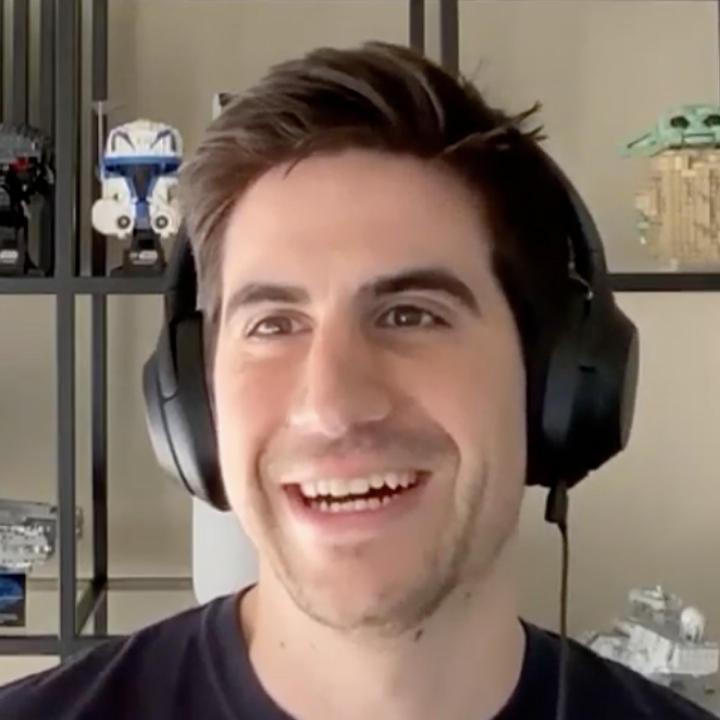
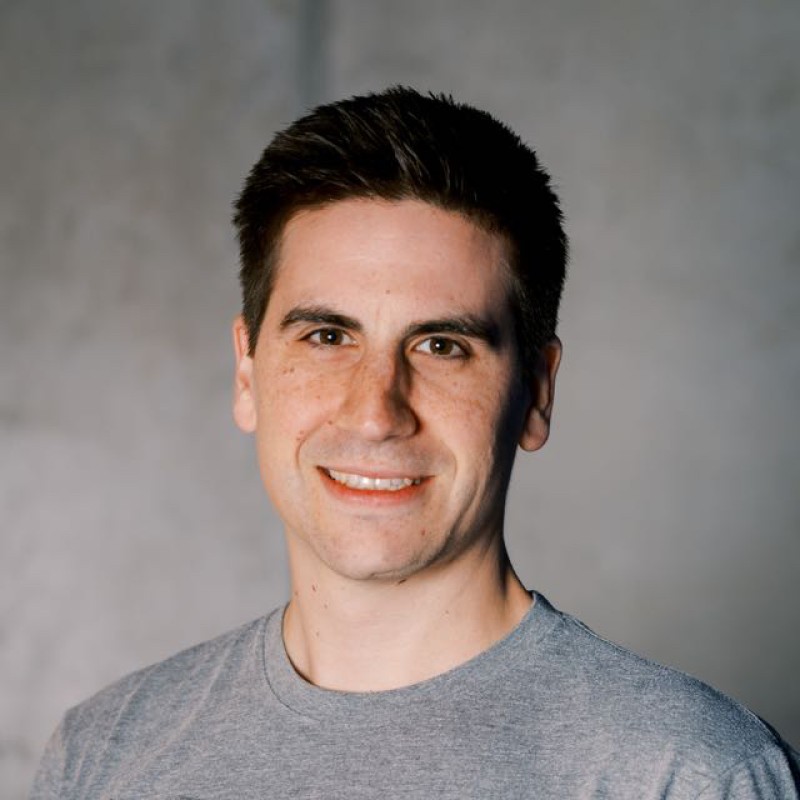
Roberto
,
Machado
Co-Founder & CEO
at
Subvisual
Episode
3
Building Successful Ventures Beyond the Agency
Overview
SubVisual didn't start as a venture studio. It started because four college friends needed to survive. In this episode, Diogo sits down with Roberto Machado, co-founder of SubVisual, a product and venture studio based in Portugal that has been building digital products and companies for over 13 years. Roberto talks about what it actually looks like to go from a Ruby on Rails agency doing €200 websites to co-founding, scaling, and exiting companies in the blockchain space. They get into why niching down early was critical, how community building shaped the company's culture and reputation, and the model SubVisual uses today to partner with founders, trading product and expertise for equity instead of cash. Roberto also breaks down what makes a great founding team, why he never looks at a single founder in isolation, and the thing keeping him up at night: Europe is running out of people willing to start companies.
Transcript
Diogo Dantas (00:01.548)
Roberto, thank you so much for joining us. As I just briefly introduced you why I'm creating this is for some of kind of selfish reasons. So I really want to interview interesting people that work in a similar context or worked in similar contexts as mine in the agency world. And I want to kind of understand better what it takes to go to the next level.
so, yeah, I'm, very interested, or very excited to, to talk with you today because you are not just a, a common agency founder that founds an agency and scales the agency, but you also build like, kind of relevant ventures. and I'm, I'm super excited to talk all about, about that. so before we get started, why don't you, why don't you introduce yourself?
Roberto Machado (01:02.036)
Sure, thank you so much for inviting me. A little bit about myself. I came from a background of computer science, did my master degree in security and cryptography. But right after college, I started SubVisual, which I've been leading for the last 13, 14 years. And through SubVisual, what I've been doing is actually...
like you mentioned, is building digital products and building new ventures. It's the two things that I love the most. I can say for sure that the place where I'll feel more comfortable and have more experience is in the zero to one of starting a company. And in the last 13 years, mainly through Subvisual, have built, I don't know, probably more than 200 projects.
and especially in the past eight years and been mainly focused in the blockchain space where we have co-founded several companies, sold companies, invested in companies and we are highly involved in that ecosystem mainly in Portugal. I'm also a founding partner at Lightshift Capital which is an early stage crypto fund that
David and Sima are running and a few other things that I have around me. Very interesting projects, but that's me in a nutshell.
Diogo Dantas (02:42.732)
Yeah, just a small stuff. So why don't we start with what basically led you to creating all this, SubVisual. What made you take the leap of starting the agency right after college?
Roberto Machado (02:46.845)
Ha
Roberto Machado (03:00.808)
Yeah, that is a bit an underwhelming explanation. There is an underwhelming explanation actually, at least that's how I feel about it. So when we were finishing college, myself and three other colleagues, we were wondering what to do next. We started the project in college that we wanted to follow up and maybe start a company through that.
Startups were a new thing in Portugal. Not a lot of people talked about it. We tried. There was not a lot of support. And also we had no idea what the hell we were doing. So that didn't went super well. And quickly enough, we started looking into services as a way to survive as a group that was trying to do things. And the command dominator that we had and was a little bit different from
what we were seeing in the market was that we were building that product in Ruby on Rails and there was no Ruby on Rails work in Portugal. And we saw that as an opportunity. Maybe we can do this as a services company and we start looking for work in that space. One of the things that we quickly realized is that
If you want to do services in Portugal and you are 22 years old, you are not going far. Because at that time, and I think things now are a bit different for the better. No one really respected us. It was like most of the things that we were or most of the opportunities that we were discussing, people actually wanted you to work for free "for experience". And so from the beginning, we set our minds to
Diogo Dantas (04:33.518)
Hmm.
Roberto Machado (04:55.952)
let's build Subvisual to work outside of Portugal and we looked into the US as the as the target like that's where that was the market that we were looking for and there's a bunch of funny things that at the time I think were important decisions like we never did a website in Portuguese which now is obvious at the time it was not all the companies had their website in Portuguese and a version in English
But we decided like 13, 14 years ago that let's only build a website in English and let's target the US as the main place to do business. And that's why we started. We built the first project for a company in Oregon that went quite well. We could increase the team. And yeah, we started doing other things. Also, another funny thing
or funny aspect of our beginnings was that we actually built the first project, our first project in blockchain in 2012, which never saw the light of the day. It was a betting platform that was never launched, but it's stick with us and got us into the space. We kept building a few other things, small other things in the next years.
And fast forward to 2017, I think that was crucial when we jumped into the space. I think we were one of the first in Portugal really building more bigger or bigger things in the space. So that's another funny aspect of it. But going back to your original question, the straight answer, I would say that it was Ruby that got us started.
and was a very important aspect of the company. Like we were a Ruby on Rails agency for a long time. We built our name into that technology. We created RubyConf Portugal a few years later. And for a few years, that was like our value proposition, like being a Ruby on Rails agency with really high quality.
Roberto Machado (07:18.546)
developing team and a product mindset. So from the beginning, we also had the product mindset where we tried to build products, focus on the user, try to have also an excellent team on the product design side of things. For example, with our now CPO João joining the team in the first months. So that's, I think that's the common denominator for Subvisual in the early days.
Diogo Dantas (07:49.098)
Awesome. So you would agree that probably being targeting a specific niche in the beginning was kind of a good thing.
Roberto Machado (08:00.088)
definitely. And that's an advice that I give to a lot of people now that I try to start similar stuff or the past years. Like it's so easy to get derailed by trying to do a bunch of different things. And there is always opportunities out there. And actually something that took me a lot of time to be better at like saying no to things. It's crucial. And you really need to simplify your pitch.
to a one-liner, like, I'm good at this, this is what I do, this is what you can expect that I'm gonna to be excellent. I can do other stuff, that's okay, but you need to have that one-liner that gets into the minds of people very easily and people start to recognize you by that. Instead of, that's another agency.
They do a bunch of stuff. They are like X, Y and Z.
Diogo Dantas (09:03.084)
Yeah, agree, agree. That's one of the reasons we're not talking about us or better mistakes, but that's kind of one of the reasons why when we build better mistakes, we wanted to specifically focus on webflow development and of course design, but design came a little bit as a consequence. But yeah, we wanted to be well known for that specifically.
Awesome. And in the early stages of Subvisual, believe that, or I'm assuming that, you started probably as a typical agency, like project by project. And you go like that. But as the company grow and also probably goals also shift, including building some ventures,
The type of engagement with clients, did that change as well or still today it's kind of a project by project clients kind of hiring sub visual project by project.
Roberto Machado (10:11.154)
Yeah, I think that's a great question. And I think the principles are the same. The way that we engage with partners and what we do with partners, it's very different. So what I mean by this is that in terms of principles, the way we interact with other people, the way we do our work, I don't see a lot of changes. It was the same.
very person oriented, like be people first, like that mantra that sometimes is abused, but really living that inside and outside, like when a partner reach to us or a potential client, we always try to understand that person, to connect with her and see if we have a good fit. And across our history and I think every agency and
Everyone actually that has to deal with clients has our stories, good stories, great stories. I think we also have all of those. But I'm proud to say that a lot of people that we have worked in the past right now are friends of mine. People that I can call if I go to New York or San Francisco. And if I want, I can sleep in their house. And that...
That is something that it's from the beginning and I think it comes from the people that you have around you when you are starting and you align on those principles. Another one is quality. Like we never deviate from that. Like if there is a good money opportunity but we cannot deliver on quality, we probably are not going to accept the project or not working there.
This is happening as we speak in the sense that we were pulled to a project a day ago and it's an urgent project. And our conclusion is that we are not going to be able to deliver on quality here. It's urgent. It's with one of the greatest, largest companies in the world, but we are not going to do it because we cannot do the level of quality that
Diogo Dantas (12:35.938)
Mm-hmm.
Roberto Machado (12:39.528)
we set for ourselves as the minimum. So that's another one. And the other principle is I don't even have a way to put it in simple words, but it's like we always strive to do things that we enjoy, that we learn, and that we see as something that is compounding our growth in some way.
stuck with us from the beginning. The reason for us to accept the project can be several. One can be money, another can be like this is a learning opportunity, this is a growth opportunity, this is a connections opportunity. So that idea of always trying to compounding something and the project that you do next needs to bring you something more than the previous one, I think it's with us from the
In terms of what we do right now and the type of project that we do now is very different from the early days. I went to butcher's house to build a website in the early days of the company. Like I have amazing stories about that. And I'm proud of them. Like we did websites for 200 euros and 300 euros. We honestly didn't care. We were just getting off the ground.
And we did everything that we had to do to build something, to build a reputation, to get out of zero in a time that we were getting out of a crisis. Work was not that frequent and available in the market. And we're just trying to survive the first couple of years to try to build something. And now
Diogo Dantas (14:24.782)
Mm-hmm.
Roberto Machado (14:37.757)
We are in a position where we are building products and ventures that are used by millions of people and that raise millions and that we work a lot in FinTech and DeFi and blockchain. So projects that also have a lot of money in total value locked and transactional volume and stuff like that.
And it's very different from those early days.
Diogo Dantas (15:10.36)
Fantastic. It seems like that you guys, and I think this aligns with a few things that you mentioned specifically, accepting projects that makes you today a little bit better than you were yesterday. And I think it aligns with what I'm asking next, which is it seems like you guys spend quite some time and consequently money on creating events, kind of making sure that you have like,
a place for people to grow and why do you invest that time and what is the impact that you see in the business?
Roberto Machado (15:51.358)
Yeah. Again, I think some things are not that rational on our side and in terms of business wise. And community is one of those that we never looked at it as a rational business decision, but something that was part of our culture, of our being. Like we are a company that supports communities and wants to build communities.
Diogo Dantas (16:10.99)
Hmm.
Roberto Machado (16:21.828)
And we do that since before the company legally existed and we continue to do that until the company something happens, closes, sells, whatever. I think while this group of people live here and live these principles, they will want to continue to do something on the community side. So, but the reason why
we justify it to ourselves, it has a lot to do with that growth mindset that you were mentioning and that I mentioned before. Like, if you interact with other people, if you get together with other people that do it differently, you are learning. You are connecting with different ways of doing what you do. You might learn mistakes, you might learn new things.
I think there is a lot of value in being connected with other people and it's so rewarding also to be the ones that bring people together that I think it's super fulfilling I have a funny story about this like there was an event created in 2012 I think called Rubinart which was in Porto
Diogo Dantas (17:48.312)
Mm-hmm.
Roberto Machado (17:50.716)
And at the time we didn't have the company, the company was not, didn't exist legally. And we didn't have any money. We had like 250 euros from a few projects that we did. And I actually put an extra 50 euros money that I didn't have that much at the time. It was mainly for beers and getting out of college to sponsor.
Diogo Dantas (18:14.734)
You
Roberto Machado (18:19.23)
that event and we sponsored the t-shirts for that event. And funny enough, I still see some people using those t-shirts now. Like a few months ago, I saw someone in Porto using one of those t-shirts from Ruby North. And I think that that exactly represents what we continue to do when we created conferences, international conferences in Braga.
Diogo Dantas (18:33.186)
Wow.
Roberto Machado (18:48.723)
in 2014 and we continue to do conferences like that, we continue to do events for crypto later on, meetups we have a new conference coming up next year called AlchemyConf in Elixir which is the tech that we are using the most now and I think we'll continue to do it and I just wanted to say another thing that is
There is, I don't think we ever did anything with more impact on the culture of the company than creating a conference. I think it's the best team building exercise that you can do. It's so stressful. You go through so many challenges as a team, as a group of people that really intensifies the culture that you are trying to build.
and people really get together to accomplish something like that. So I'm definitely positive that in terms of business, it had a profound impact on everything that we did, but we never did it for that reason. And we'll continue to do it, not for that reason, but to do things that...
we care and we like and to get together with people. For example, we started a new event called Subvisual Star Base in Lisbon a few months ago and now we are doing another in Braga. And it's just an event where we get a place, we are there for the day and we invite people to come over. We have food, people always like to have free food. So that could be a good catch to get people there.
Diogo Dantas (20:36.59)
You
Diogo Dantas (20:40.876)
Yeah.
Roberto Machado (20:45.054)
But the point is we just want to be together with people. And on a day after COVID, I think we all know how important that is. We all miss it. So actually that Starbase event in Lisbon was one of my favorite things in the last couple of years. Because it was so cool to be in a place and getting people together and seeing people that didn't saw each other for years.
like hugging each other and saying, hey man, so good to see you. And seeing that happening, yeah, it's super fulfilling and I really enjoyed that.
Diogo Dantas (21:25.292)
Yeah, it sounds pretty great. Staying on the topic of culture, Subvisually is mainly, the team that works at Subvisually is mainly kind of local, right? You don't have that many remote people. Is that right or?
Roberto Machado (21:45.588)
That was true for a while. None of these, I think we have people across Portugal and a few outside of Portugal and we are fully remote. We always from day zero, we were remote friendly. We never forced people into an office. And when COVID happened, actually that was a tricky thing for us because we were so used to be remote. thought that
Diogo Dantas (21:59.01)
Mm-hmm.
Roberto Machado (22:16.088)
We are okay with this, we know how to do this. And for a year or two, we didn't change that much. And I think the world changed around us and we took some time to adapt to that. Sometimes you when you are used to something, you get accommodated and you feel that you are handling the situation, but actually things are moving faster than what you think. But none of this is visual.
The Subvisual team is remote. We have people across Portugal, a few people outside of Portugal. And what we try to do in terms of being together is we are doing something that we call expeditions every month. We go to a different city where we have people and spend time together, the ones that can make it. And yeah, we have all of these events where we also get together.
And we do two retreats per year. That's how we are handling it.
Diogo Dantas (23:19.402)
Awesome. Yeah, that's kind of what my question was kind of how you handle, assuming that you have at least a little bit of the team remote inside of Portugal or not, how you handle culture, especially when you are creating these type of events where I believe that collaboration and also you mentioned that collaboration is very important.
how you make sure that everyone is still like far, but still connected and well connected because things can work remotely kind of good enough. But at the end of the day, if you put people together, there is no better way than to kind of to see how really the relationship is. Cool. Do you do you besides besides those events?
those tours that you do, every month, do you have any other kind of remote, activities or routines that you do to make sure that culture is, kind of on track.
Roberto Machado (24:30.878)
Yeah, we do have and I feel that we are doing a good job right now, but my feeling and it's not just with the visual, because I have visibility into a lot of other projects. I think we are still all learning how to evolve into this new landscape where people are separated, isolated, which is...
very different from what we had before. If we go back a few years, it's important to remind ourselves that most people that work remotely at the time, I feel that most of them work from a co-working space or from a friend's office. There was not that many people working from home. Some people did, but not at the size that we have now. So isolation is very different right now. We have a lot of people in our team and
across the industry working in an isolated setup. And that requires a huge effort as a company to make sure that those people are okay, they have the social support, et cetera, et cetera, which I don't think it's the company's job, but at the same time, it has an impact on the company. you need to manage that.
in a way. So the bunch of things that we are doing right now. So we have a weekly meeting on Monday where everyone gets together shares a bit of a personal update on what they did with that life if they want in the weekend. How was the last week's work? What they are planning for this week? So it's like a social gathering.
We organize a bunch of social games that are organized by the team. We don't have a specific person handling that. Some people in the team start the book group, other people do board games online or stuff like that. So there are a lot of these social moments that happen.
Diogo Dantas (26:39.214)
Mm-hmm.
Roberto Machado (26:56.243)
that we try to not mess with it or control it in any way. We don't want to get there, but in a way we incentivize people to do it. And everyone in the team contributes to that. Like, let's do stuff. Let's get together. Let's do different things. Another thing that is super important is that the team has different aspects and different groups inside.
the technical team, the product team, the ops team. And these teams also get together once in a while. They do things together. They share knowledge in different avenues. A lot of different things happen on that front. And another thing that I think on productivity that is super important is how you start projects, which...
Diogo Dantas (27:27.406)
Mm-hmm.
Diogo Dantas (27:52.994)
Mm-hmm.
Roberto Machado (27:54.419)
For me, it's a big topic being like a company that starts a lot of projects and starts a lot of companies. Like that company set up, the team set up, the beginning of something could be like a conversation by itself. And on that front, in the last four years, I've been in projects that started entirely remote, like where people saw themselves for the first time like...
six months after starting. I have done the otherwise, like people get together for a couple weeks to start something and then each one goes to their normal place of work and they get together after a months. And I have to say that I'm not convinced that there is a one solution fits all. I think it highly depends on the people that you are getting involved in the project.
But I definitely believe that some people really, really need to be together to start a project. And not having that is like starting with an handicap. That is hard to catch. So still a lot to discover in this space. I think that...
Diogo Dantas (28:58.296)
Mm-hmm.
Roberto Machado (29:16.979)
on our side and a lot of other companies that I'm involved or that have connections or friends. A lot of people are still trying to discover what is the right setup for the next years. And I believe that there will be a lot of discovery.
Diogo Dantas (29:30.466)
Mm-hmm.
Diogo Dantas (29:34.476)
Yeah, I'm sure. Yeah, remote in person is already pretty complicated to handle because people, we are all different and everybody has different expectations. But remotely, you are, you don't.
You don't have a 100 % sense of the things. It's even more challenging. So it's, it's even more challenging to keep things on track and you need to be really on top of things.
Roberto Machado (30:03.121)
Yeah. And just to add another thing, another layer for us and in a lot of different companies that I've seen, like there's also the evolution on the personal aspect. Like one of the reasons that I believe that COVID added some struggles to our cultural handling was that
Diogo Dantas (30:18.445)
Mm-hmm.
Roberto Machado (30:32.22)
was not just COVID, isolation, everything that I just mentioned, but also the company evolved in the sense that people started having kids, people got married, people moved to a different place, people bought houses. So there was a lot of moving pieces that either you like it or not, they mess up with the whole...
framework or the whole equation and you need to make, you need to adapt. Like to give you a simple example. It was almost impossible for us to conceive the idea that we'll do a retreat and not having someone from the team there because we are a small team. Our whole purpose was let's always be small because we want to be together. We want to do great work, know each other, et cetera, et cetera. So
Diogo Dantas (31:26.485)
Mm-hmm.
Roberto Machado (31:30.388)
For a long time, we always thought like retreat is that sacred thing that everyone needs to come. Yeah, but person next just had a kid. We are not going to force him to come to a retreat. And you need to adapt for that. And that's okay. Like things change and you adapt. And if there is one thing that I feel that we were always very good at was that adaptability and having like always a growth mindset like
take the new thing in, absorb it, change, adapt, evolve, and not get disturbed by that. But yeah, a lot of moving pieces into this new world after COVID that you really need to adapt for that.
Diogo Dantas (32:17.4)
That's true, that's Switching topics a little bit, one of the main topics, doesn't matter the business, kind of the industry or whatever, is about sales. So I just wanted to touch this a little bit, and especially in the agency side, not really how you handle...
the sales in SubVisual or how the team handles sales, what are some of the, from your like almost 14 years of experience at SubVisual, what are some of the learnings that you think that worked best and what didn't really work in terms of business development or sales?
Roberto Machado (33:07.601)
Yeah, definitely a topic that we experimented a lot across these years. I'm going to start with what doesn't work for us. And then I'll go into how we mainly do it and how we mainly have seen success in the last years. Being a small team with that mindset of being close to people really
building relationships or strong relationships. Every time that you tried to get from that principle and just do stuff that was more on a certain or on the pursuit of a certain scale really didn't work for us. Like doing strategies for alt-bunt to reach out massively to people to try to scale to a model where
For example, you had a lot of people trying to bring you business and you'll pay them a referral fee. Those were all experiments that we did that we never saw a lot of conversion. Especially when we tried the outpounding thing. It didn't align with our persona, like the way that we were. Because it got a lot of noise and we could not handle that noise.
And it just, it was a waste of time. So I think that's kind of summarize what doesn't work for us. Like when you try to increase the volume to a noise, it normally doesn't work. Maybe there is something that we'll try in the future that was going to work, but hasn't worked for us until now. What does work?
is exactly the opposite. Like, it's building connections to people starting with locally. Like, I'm sure that there is people locally that everyone that is running a company or an agency can connect and that people can bring you business, can introduce you to other interesting people. So that's always my baseline. Like, find someone to talk, get out of the door.
Roberto Machado (35:32.08)
meet people that are more interesting than you and those people will always be interested in helping you because I think that's how humans normally behave. If you ask for something I'm going to help you, if you don't show up people will not know about you. My mother always had an expression that was like, let me translate it to English
If you don't show up, you are forgotten. Doesn't sound that cool in English, but in Portuguese it's more known. I truly believe that. If you don't show up anywhere, no one will know about you. And that connection locally with meeting people, think it's a first start that everyone should do, independently of what they are doing. And then you scale from that.
Diogo Dantas (36:04.494)
Mm-hmm.
Roberto Machado (36:29.424)
If you do a good job with your clients, they will be the first ones presenting you, introducing you to other people. think that's if I could find like, and actually we have done this, this like, is the number one way for us to get projects. It's through our past clients. Like, but with a huge difference from the second one. So.
If we do a good work, people will refer us because people always are trying to help other people solving their issues. And what we serve for to solve an issue to someone that needs to build a product. So that's how the flywheel goes. piggybacking on something that we discussed before, another thing is the community side. Like, even though I said that we never did it for this,
Diogo Dantas (37:02.947)
Yeah.
Roberto Machado (37:27.539)
like a byproduct of being present, of organizing things, of being in the community. People will know you, they will respect you, they will mention you when someone is looking for something. In the end, it all comes down to that idea of connecting with people, understanding them, solving their problems. If you want that saying from...
forgetting his name, but he has a book called Jib Jib Jib Jab, which also can be known as give, give, give, give and then take. And I think that's a principle that we always follow in sales, in sides of visual. In Garry V, exactly.
Diogo Dantas (38:08.002)
Mm-hmm.
Diogo Dantas (38:14.71)
Is that from Gary V? Yeah. Yeah. Yeah. I share that opinion. think it's it's a business thing. it's a people thing that sooner than later, it might lead to some type of new business. And I'm assuming that
Organizing the events and sorry for going back again to the events. Organizing the events might also help not only with business development at some point, but also with hiring because it's also one of the struggles, right? One of the main, especially the services industry is a business, is a people business. And, hiring is, is as important or close to be as important as business development.
You can have a full pipeline full of leads or new business, but if you don't have like the talented people to fill those leads in sooner than later, it will dry up because you are not delivering. So is that correct to assume that the event will also lead to interesting candidates?
Roberto Machado (39:26.036)
Definitely. Yeah, definitely. I'll not say that is one of the most important factors for us, but definitely helps. Again, if you are talking with people, if you are meeting interesting people, they might be interested in working with you or they might know someone that might be interesting for you. And that definitely helps.
And also, maybe there is like a flywheel there as well, because if you meet people in an event, if they like to be participants in a community, they potentially also want to be drivers of those communities. So they might join you. They also might want to be interested in doing those type of events or new ones.
Cultural fit in hiring is another thing that I guess sometimes it's abused, but it's still super important. The way that you hire, it's what makes your company. And if you do a great job there, most of your problems are solved as a leader of a company.
That's how important it is.
Diogo Dantas (40:57.762)
Yeah, for sure. And now going, leaving the agency side, a little bit, as I mentioned in the beginning, what fascinates fascinates me the most, about your kind of your path.
is, kind of how you found the successful digital agency. And then you were able, you had the drive basically, because it's not easy. It's kind of easy to start an agency, kind of start going it slowly and stay that way for a long time because it's just sustainable. the risk is kind of controlled. but you don't.
So you decide at some point to start building new ventures and some of them were pretty successful from my point of view and I think from others point of view. My first question on that topic is why did you decided to start new ventures from something that was kind of working?
Roberto Machado (42:13.095)
Yeah. I don't feel that I made the decision to one day we are going to start ventures because I think that was built in from the beginning as well. Like the idea that we wanted to build something bigger than just man our business where we are selling your time against euros or dollars was always there.
what we didn't know is how to do it and what would be the model that could have success. And the way we got there was through a lot of failures, as you should. So we started, we tried to build things with great people around us that didn't went anywhere. We tried again, we tried again until that's...
there was a point where we built something that was successful, like potentially U-Trust was our first case of that, where it was successful on different areas. Like, because we had things before that we did that were successful on making money or growing or getting some visibility in the market, but U-Trust was like the...
The first thing that really made it in a lot of different aspects was marketing wise was potentially the most known project in blockchain in Portugal for a long time and Europe and still today I meet some people that, I was an early investor of Utrust or yeah, I used Utrust in 2019 and that's amazing across the globe. So not just...
around us. So, but going back to your question, I think the drive was always motivated by two things. One, the reason that we want to do ventures is that we want to be integrated and participants in the process of making software that really impacts people.
Roberto Machado (44:37.439)
And when you are doing services and you know this as well, you are always restrained to the scope that people give you. Like, you get something to build, you build it, you are out of it. Like, don't have... Of course, people can say, no, but I'm highly motivated because I want to be part of something and contribute to something. But you don't have a level of skin in the game.
that we as a company like to have and me personally, I definitely like to have. I like to be involved as much as I can in the company building process. I want to know about hiring. I want to know about the business that you are building, the different assumptions that you are going to validate as a business to have success. What is your go-to-market strategy?
These are questions that most product companies that just do services, they either don't care or they pretend to care to make their service successful. But in the end, they don't really care because they don't have that level of skin in the game that I was mentioning. So that was one of the reasons we want to be participants in that. The second reason is financial.
Diogo Dantas (45:42.872)
Yeah.
Roberto Machado (45:59.235)
We knew that we knew two things. We didn't want to have a large company mainly because being part of a large company is very different from being part of a team of 20 or 25. There's a whole menu of problems that you don't get by being a small team. And there is a...
all menu of benefits by having that connection with a small team and working closely with a very strong small team that we like. So we knew that we didn't want to be a large team. Second, we are ambitious. We want to build something that is great, is huge, that has a certain size, that is financially interesting. So
you had these two things and you get into a mindset of, let's find out what can get us there. And building ventures and building the venture studio side of our business was our plan. And we tried the different ways. And right now, the way it's structured, we have the product and venture studio. So we do products, we still do services for companies that we like to do that has a certain, fill a certain criteria that
that fits us. And we do ventures with founders that are interested in working with us. We are interested in working with them and they are building ideas that we also see value, enjoy, see the potential, et cetera, et cetera. And also we have our investment arm. So through these exits that we had in the past, we also managed a portfolio of investments, which include
the ventures companies that we build, but also other companies that we only invest. And those companies that we invest sometimes become more clients, sometimes refer us to new clients. So there is also a process here that is highly integrated that really makes everything work. And that right now we are really proud and really enjoying doing this whole process.
Diogo Dantas (48:18.664)
Amazing. think this next question goes in line with what you just mentioned. I'm assuming that in the beginning, those ventures were kind of incubated inside SubVisual. So you probably were using SubVisual talent and capital to start those companies. have you tried...
to raise some seed capital to fund those startups in the early days.
Roberto Machado (48:51.313)
Yeah, we did. There was attempts on our side to do the full ideation process inside SubVisual. Raise capital, find founders and then spin off. That didn't work. And even today, if you go to a lot of VCs in Portugal and you say, I'm building this with Venture Studio SubVisual,
They'll say, we don't like that model. Like having a venture studio, not our thing. The founder could say, yeah, but these guys have a success rate incredible. Like there are VCs in Portugal that made a lot of money by having companies that they helped build. But they still will be like very traditional and trying to find friendly words and not...
and not want to engage with a company in that setup. So the next thing that we tried or the thing that we tried more and that is actually working for us is the other model where there is a founder or a group of founders. That founder sees the value in having a venture studio that could help them speed up the beginning of the company. And that's what we do.
Basically, we accelerate the first six, nine months of a company through building the product, to connections, to money, to the expertise that we have to, like I said in the beginning, through the experience of building more than 200 projects and seeing a lot of them fail, like the majority of them fail, we have a lot of accumulated experience. And some founders see the value in that.
Diogo Dantas (50:24.205)
Mm-hmm.
Roberto Machado (50:49.007)
and they came to us to be their partner, to give us equity in exchange for that knowledge, the product creation, et cetera. And those founders are the ones responsible for raising capital, and normally they do. And the process then goes until the point that there is a moment where it's irrelevant. We are not adding a lot of...
multipliers in the company and we replace our team with a team that we help hire for that project. And that's the model that we are doing the most now and it's working very well for us. I think that with this model we have done more than 12 companies. From those 12 we already had two exits and a lot of them are doing well. Some of them already failed as well. It's part of the process. And it's a model that
After all these years, we feel that is the best one for us. I know a lot of venture studios that do it differently and it's amazing to see. I know some of them and good friends with them. For us, we feel that this is the model that works the best.
Diogo Dantas (52:04.546)
Great. And although you, as we already know, we are involved in quite a few things and you have the same 24 hours that I do and that all do. So I'm assuming that you are not kind of an operator on the day-to-day basis of all those business or if you are just a few.
Wendy? Yup, go ahead.
Roberto Machado (52:31.476)
Just to, yeah, I'm not. And the only reason why I can do a lot of things and sometimes people say, the fuck do you have time for all of this? It's because I have really great people handling most of these things. And yeah, they sometimes don't get the credit for what they are doing. But
Diogo Dantas (52:48.194)
Mm-hmm.
Roberto Machado (53:01.255)
They really are the ones running the show. And sometimes in a lot of things that I'm involved, I'm just pulling some strings and plugging some chords and that's it.
Diogo Dantas (53:12.246)
Yeah, just that. Yeah, simple stuff. But when do you think is the right time to find those people? Do you already have, or as you start building the business from zero, as it starts growing and you see it has product market fit and all those beautiful things, when it works,
Roberto Machado (53:14.012)
Hahaha
Diogo Dantas (53:37.87)
You already start thinking of some people that could be a good fit for kind of run the business or there is a point where you say, okay, I'm overwhelmed with kind of the time that I'm spending here. I need to find someone and only then you kind of go and find that person.
Roberto Machado (53:58.331)
Most of the times there is a pull for a founder and then there is a start for the project. And the times where I did it the other way around are the ones that didn't work that well. So I always try to start with first let's get the founder in.
let's see if he's either he brings the idea and then we just build on top of that or we see if he's passionate about the idea and then we build with them. So in my case, most of the things that I'm connected, there's always someone in place that is running the show. I'm just helping and Subhuzul is helping on that process of running the show.
And I think that's a big difference for most of the things that we have done successfully is that, and also we got better at identifying great founders and sometimes betting on people that never built anything before. And we saw the value in them, their capacity to grow, to learn, and we bet on them. Sub-usual has a...
very good track record of being the first investor in a lot of ventures. Like the first ones, like if you want an example, frame drop in Coimbra. Like we were the first ones getting with JD, starting it, being with them for a few months until he got the co-founder and things started to grow massively. But taking that risk, it's really hard.
And it's something that we lack a lot in Portugal, by the way. there's not a lot of people doing like that pre-seed angel investment, family and friends that really gets more people to try things out.
Diogo Dantas (56:13.996)
Yeah, indeed. think it aligns with the fear of failing and what people will think about us. I think in general, we all are a little bit like that. But from what I heard, the US has a little bit of a different angle to that. You are not that.
massive failure if something doesn't work out. You go to the next thing and until you make it make make it work. But here is like, okay, I failed once and I'm a failure for the rest of my life. So I think that might be aligned with why people have such a fear of kind of asking for things or having such a trouble starting up just to feel are failing.
Roberto Machado (56:43.849)
Ha
Roberto Machado (56:58.867)
Definitely.
Diogo Dantas (57:00.718)
And in your opinion, what makes a great founder? I know this is not a simple answer. Maybe it is for you, but what are some of the traits that you see on great founders?
Roberto Machado (57:11.877)
Yeah, it depends on the role of the founder, but trying to give like a more generic answer. I think a founder needs to be really passionate about what he's building, really needs to understand the market that he's going to and to understand the problem that he's trying to solve.
and really be really sharp, sharply focused on trying to solve that to a point where depending on the role, maybe it's important that you have some delusional approach to solving that problem. if you sometimes you cannot be too attached to reality to solve a problem because you need to
be able to imagine a world different from what it is today, and you are the one pushing for that change. It needs to be incredibly curious. It needs to be a person that really is curious about things. And I don't think it's one of the aspects, as we talk a lot, a lot of founders are immigrants. A lot of people that are successful founders are immigrants or come from a...
non-linear background. And I think that's one of the main reasons, because their path led them to be exposed to a lot of different environments, to be curious about things, to learn with other people. And I think that's super important. And they need to be technically good in what they do. Starting a startup, building a company,
It's like, it's a super challenging endeavor. One of the hardest things to do. And the handicap that we, you start that approach will be measured against other people that are trying to do the same. And if you can culminate your handicap with other co-founders, with partners, with...
Roberto Machado (59:38.139)
Adventure studio whatever or people that you the first people that you hire increases your chances of success so a founder that is also aware of that I think it makes a lot of difference like being aware of the things that you are good at and the things that you are not good at and you need to Resolve for that you need to find ways to solve that
It's incredibly important. I never see a founder like a one piece for a startup. I always look at the founding team. Like, what is the founding team? Like the calculation that comes from all the variables that the different people that are starting a company solve for.
And I think that's much more powerful than, this founder is incredible. Yeah, but does he work very well with the other founder that is also incredible? This founder is not that good. Yeah, but he has a co-founder that really solves for all the things that he's not good at. Like, the degradation of a founding team is what gives you the probability of success of a certain company. So I never like to look to a founder.
as a one piece thing. It's the cemetery of all of them. And that also, and going back to our case, that also comes into place when we are trying to start something with a group of founders. Like, does it work with us in that equation? Like, we kind of put ourselves like, we are another co-founder, let's do the calculation now. And does this...
Diogo Dantas (01:01:19.342)
Mm-hmm.
Roberto Machado (01:01:31.847)
brings value to what you are starting or not. And if you are the tremendous, if we are the tremendous to that group of founders, it's not the right place for us. If we had value and we can have a multiplier effect, amazing, let's do it. So I think I probably took a little bit more time than what you're expecting for this answer, but I think this last part is really, really important.
and fundamental when analyzing a founder or a founding team.
Diogo Dantas (01:02:04.974)
Mm-hmm. No, that's a good point. It's not always just about one person specific. So yeah, thank you for that. And I want to be respectful of your time, so I will try to wrap up with just kind of two questions. I think they will be kind of simple to answer, and then we can wrap things up. You are also...
Besides just the simple things that you mentioned, being the founder of SubVisual, a co-founder of a few companies, you're also advisor for some startups, well known, at least in Portugal, like HoverFlex and Phenium. I know that I could ask ChachiPT or Google about this, but it is probably a topic that depends.
In your experience, what is the role of an advisor in a startup?
Roberto Machado (01:03:05.47)
Yeah, for me, it's a really simple answer, like you mentioned. An advisor is someone that adds value to that company. And can be so many things that it's impossible to describe them. But I have seen advisors that did an introduction and
made or break a company, but especially on the made part. And I've seen advisors that almost work side by side with the founder. It's not a thing of time, it's a thing of value. How much value you are adding to that company. And my experience, you mentioned a few through my LinkedIn, but I've been advising a lot of companies
Diogo Dantas (01:03:36.494)
Hmm.
Roberto Machado (01:04:04.217)
either stuff that we start with the visual or just friends or people that ask me that I never cared about putting it public. It's not about that. I have had so many experiences that it comes down exactly to what I was mentioning, like am I adding value? Am I not adding value? And that's it. So advisory.
And maybe just sharing your word about the responsibility of being an advisor, because that's something that here and there I've seen people mess up with it. Like if you are making yourself an advisor to something, really make sure that you are adding value and that you are not removing value from the company because...
The feedback that you share with a new founder, especially if they are first time founders, it can have a huge impact. Like some people sometimes don't measure the impact that they can have with feedback that they are sharing. So it comes down to that simple sentence, like you need to add value with the caveat that if possible, please don't remove value.
Diogo Dantas (01:05:27.246)
Yeah, that's a good point. Those are kind of the small letters that should be included.
Roberto Machado (01:05:35.366)
Yeah, there was a guy that I'm not going to remember now the name, but I'll love to remember that there is a very important VC, one of the most knowns VCs in the West that share like 70 % of VCs actually are detrimental for startups. Andy had some data to back his words. And this is the same for
for advisors, like a lot of advisors, and maybe I've done it myself, like a lot of times are detrimental for companies.
Diogo Dantas (01:06:14.478)
I believe so Cool I think I I just I only have one final question Which is typically the way that I like to finish These these these conversations is there one thing
that you are currently struggling with that you would like to share and just for context why I asked this, this is just for kind of to keep the loop on things. Maybe I will talk with someone in the future here that will went past that struggle and I can probably connect to you guys. Is there any specific struggle that you're dealing with right now?
Roberto Machado (01:07:01.971)
Yes, and comes in line with what we were discussing a few minutes ago. Like one of the most difficult things for me and what we have been doing, it's a visual, but also at other things that I'm involved like Lightshift, Capital, SemCap and others. It's really hard to find good founders. Like we are in a...
in a stage right now that it's not very smart to start a startup. The obvious path is not starting a startup. There is a lot of money to make being an employee, doing other things that can have really good returns for you. And...
I think that is driving to a position in the market right now where we don't have a lot of people trying to build new things. And more than that, even I think we got again to that place where there are career paths that are more obvious even for parents and for people that sometimes give advice to new...
new ones coming to the market that, yeah, just go to this consultancy firm, they are paying very well. Why the hell are you joining a startup or starting a startup? And we really need to solve this because right now, for example, in the market in Portugal, are, and Portugal, Europe in general, we are getting behind.
Innovation is happening elsewhere. The world didn't run out of problems to solve. We run out of founders to solve them. And across the world, are like hot spots to start companies everywhere. It's anymore the Silicon Valley is the land of innovation. It's everywhere. For example, we work with founders from all over the world. We don't care if they are in Portugal, but
Roberto Machado (01:09:29.305)
it's obvious that it's easier to connect with people around us. And if we had more people to start things, we could, but we don't have great founders around us. So if you can help us with that, or you come across anyone that could be a good fit to be a founder and has some idea that you'd like to explore, I'm always happy to talk with all of them.
Diogo Dantas (01:09:48.513)
Mm-hmm.
Diogo Dantas (01:09:54.36)
Cool, and are you looking specifically for founders with ideas or founders that could join an already idea that you have or? Okay.
Roberto Machado (01:10:07.101)
Both, Right now, like in that point that I mentioned to you, like there are founding teams incomplete around me, but I need to find other founders to join them. There are ideas that we have that could be explored if we find the right founders to be passionate about them. And if there is a founder with a great idea that he sees the value in having a venture studio.
Diogo Dantas (01:10:16.256)
Mm-hmm. Yeah.
Roberto Machado (01:10:33.767)
helping or just looking to raise some initial capital. I would love to meet them.
Diogo Dantas (01:10:39.178)
Awesome. Roberto, that's it. Thanks so much for your time again and for sharing all the, all the experience that he went through for the last year, like 14 plus years. So yeah, thank you so much.
Roberto Machado (01:10:55.549)
Thank you so much for having me. Continue doing a great job with the better mistakes. We love to be your partner in a lot of things and let's keep doing things together.
Diogo Dantas (01:11:07.95)
Let's do it. Thank you.